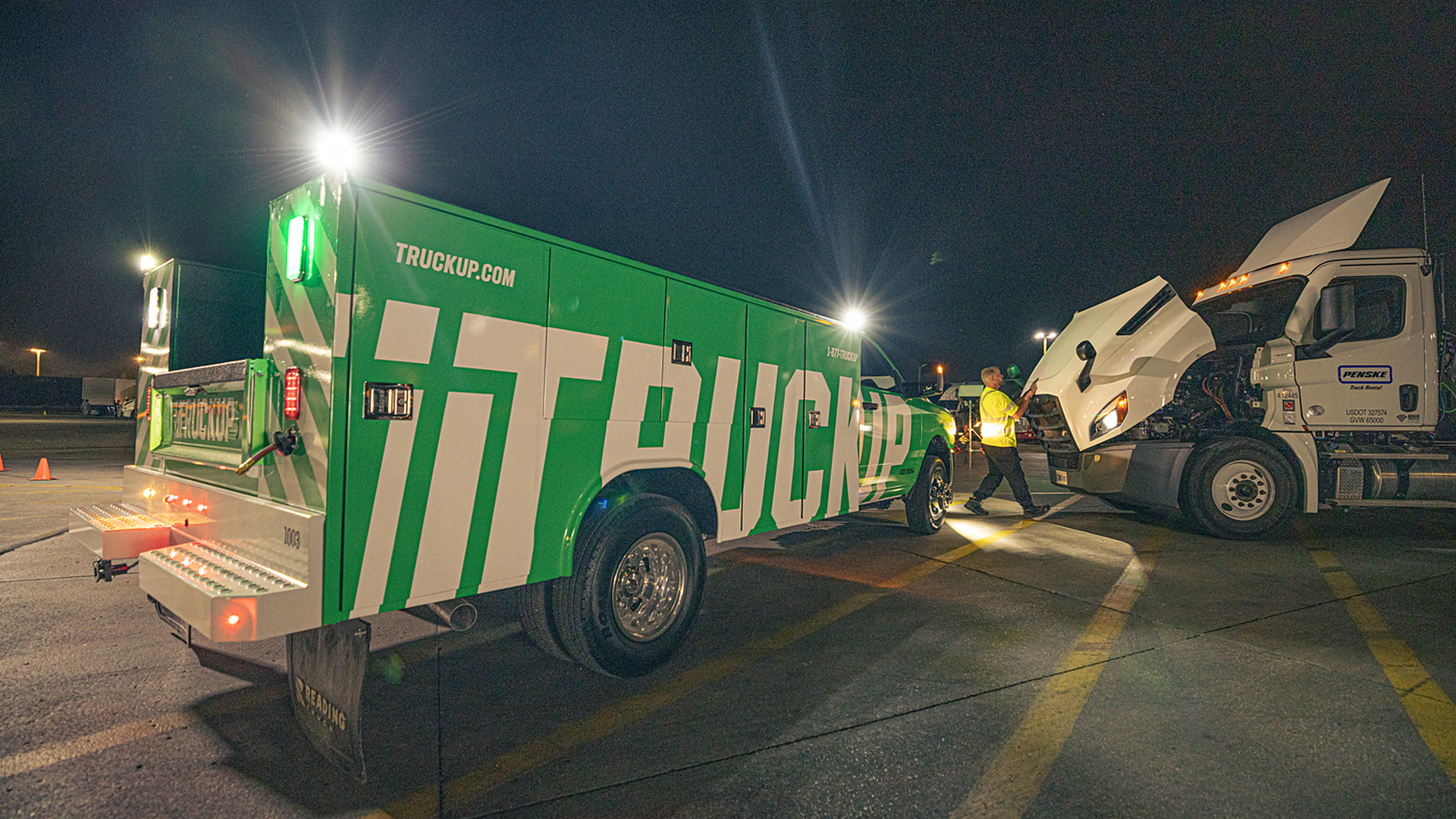
A truck is down and the load is at risk. The fleet manager has two calls to make: a mobile mechanic to the truck, or a tow to the nearest shop.
The repair itself is usually a few hours of wrench time either way. What separates the two options is how long the truck waits for that work to start. A tech dispatched to the truck starts when he arrives. A truck in a shop starts when a bay opens.
That wait has a price. The average marginal cost of operating a tA truck is down and the load is at risk. The fleet manager has two calls to make: a mobile mechanic to the truck, or a tow to the nearest shop.
The repair itself is usually a few hours of wrench time either way. What separates the two options is how long the truck waits for that work to start. A tech dispatched to the truck starts when he arrives. A truck in a shop starts when a bay opens.
That wait has a price. The average marginal cost of operating a truck hit a record $2.336 a mile in 2025, and repair and maintenance was one of the fastest-rising line items at 8.6 percent year over year (ATRI, 2026 Analysis of the Operational Costs of Trucking). A parked truck still carries most of that cost and earns none of it back.
A fleet has limited control over what a repair costs. It has more control over how long the truck waits for one.
Key Findings
- Shop turnaround is a capacity problem, not a skill problem. 65.5 percent of diesel shops were understaffed in 2025, with 19.3 percent of tech positions unfilled (ATRI, 2025). A shop cannot turn trucks faster than its staffed bays allow.
- Parts wait is built into the shop model. TMC's own best-practice standard tracks time waiting on parts as a known delay category; a single back-ordered component can add days.
- The bay is the business. 80 percent of heavy-duty shops now offer mobile service (Fullbay, 2026), but most route work back to the shop queue.
- Mobile labor runs about 10 percent higher per hour ($160 vs. $145, Fullbay, 2026). Total cost runs lower once the tow you avoid and the days out of service are counted.
- A truck with a tech on site in 60 to 90 minutes is back on a load the same day. The one in a shop queue is on someone else's schedule for a week.
Why do shops hold trucks for 7 to 10 days when the repair takes 4 hours?
"Taking it to a shop, it's sitting there probably three days before they actually get it into the shop," says Kea Wanamaker, a fleet manager with WillScot Mobile Mini Holdings. "Your turnaround time can be anywhere from seven to 10 days."
The wait has little to do with the skill in the bay. It comes down to capacity, parts, and the way a shop's revenue is structured. The truck waits behind the workflow, not behind the wrench time.
Technician Capacity
Good techs are hard to find, and shops feel it first. 65.5 percent of diesel shops were understaffed in 2025, with an average of 19.3 percent of technician positions unfilled (ATRI, Addressing the Shortage of Qualified Diesel Technicians). Technician turnover ran 16.5 percent in 2024, and nearly double that at understaffed shops.
Roughly one bay in five has nobody working it. The shortage slows repairs across the industry, but it shows up first as a shop queue. An understaffed shop cannot repair trucks faster than its staffed bays allow, and every truck in the lot is waiting on the same short roster.
Parts and Diagnosis
Waiting is built into the shop model's own benchmarks. The American Trucking Associations' Technology & Maintenance Council (TMC) Recommended Practice 1604 targets starting diagnosis within two hours of check-in and tracks time waiting on parts as a known delay category. The standard does not eliminate the wait. It measures it.
Fleets feel the same constraint from the other side. 28.9 percent of fleet professionals named parts and vehicle availability a top concern for 2026 (Fleetio, 2026 Fleet Benchmark Report).
"A DEF filter can take three, four, five days just to get in stock," says Dean Johnson, an owner-operator. "I've been there. Three days in a hotel waiting on a pump."
Built-In Incentive
80 percent of heavy-duty shops now offer some form of mobile service (Fullbay, 2026 State of Heavy-Duty Repair). For most of them the service truck is a sideline and the bay is the business. That incentive shapes where the staffed hours go.
"Most in-house shops, even if they have a mobile guy, most of the time they try to refer everything back to the shop," says Rey, a Truckup mobile mechanic based in Arlington, Texas. "Being 100% mobile, we kind of don't have a choice but to get you going out there."
What does mobile repair cost compared to a shop?
Truckup's rate structure is $115 for the call-out plus $140 an hour, with a two-hour minimum, at the same rate day or night. No fuel surcharge, no per-mile charge, no port-to-port billing. The first two hours land at $395.
"We're $395 for the first two hours, plus any parts," says David Pitman, a Truckup dispatcher. "Two o'clock in the morning, $395. Two o'clock in the afternoon, $395. When you get your bill, you don't have to take off your shoes to figure out what they charged before midnight."
Against the industry benchmark, mobile labor carries a premium. Fullbay's 2026 State of Heavy-Duty Repair puts the median in-shop labor rate at $145 an hour and mobile at $160, on 2025 data. Per hour, mobile runs about 10 percent higher. That is the wrong unit for the comparison. The full cost comparison adds the tow a mobile call avoids and the days a shop queue adds, and the total runs lower for most repairs in mobile scope.
"It took him about three hours to fix a problem we'd spent 40 grand on across different vendors and shops," says Chaz Bryant of Sunrise Moving & Packing, whose fleet moved off the shop model after that repair. "One guy who actually knew what he was doing made small work of it."
Same-Day Repair vs. a Week in the Queue
A truck with a tech on site in 60 to 90 minutes is back on a load the same day. The one in a shop queue is on someone else's schedule for a week.
"If you tell me it's going to take an hour, then I believe you," says Dean Johnson. "I was down for exactly the two hours that I expected. That means a lot."
The wrench work is the same either way. What differs is how many days stand between the call and the load.
ruck hit a record $2.336 a mile in 2025, and repair and maintenance was one of the fastest-rising line items at 8.6 percent year over year (ATRI, 2026 Analysis of the Operational Costs of Trucking). A parked truck still carries most of that cost and earns none of it back.
A fleet has limited control over what a repair costs. It has more control over how long the truck waits for one.
Key Findings
- Shop turnaround is a capacity problem, not a skill problem. 65.5 percent of diesel shops were understaffed in 2025, with 19.3 percent of tech positions unfilled (ATRI, 2025). A shop cannot turn trucks faster than its staffed bays allow.
- Parts wait is built into the shop model. TMC's own best-practice standard tracks time waiting on parts as a known delay category; a single back-ordered component can add days.
- The bay is the business. 80 percent of heavy-duty shops now offer mobile service (Fullbay, 2026), but most route work back to the shop queue.
- Mobile labor runs about 10 percent higher per hour ($160 vs. $145, Fullbay, 2026). Total cost runs lower once the tow you avoid and the days out of service are counted.
Why do shops hold trucks for 7 to 10 days when the repair takes 4 hours?
"Taking it to a shop, it's sitting there probably three days before they actually get it into the shop," says Kea Wanamaker, a fleet manager with WillScot Mobile Mini Holdings. "Your turnaround time can be anywhere from seven to 10 days."
The wait has little to do with the skill in the bay. It comes down to capacity, parts, and the way a shop's revenue is structured. The truck waits behind the workflow, not behind the wrench time.
Technician Capacity
Good techs are hard to find, and shops feel it first. 65.5 percent of diesel shops were understaffed in 2025, with an average of 19.3 percent of technician positions unfilled (ATRI, Addressing the Shortage of Qualified Diesel Technicians). Technician turnover ran 16.5 percent in 2024, and nearly double that at understaffed shops.
Roughly one bay in five has nobody working it. The shortage slows repairs across the industry, but it shows up first as a shop queue. An understaffed shop cannot repair trucks faster than its staffed bays allow, and every truck in the lot is waiting on the same short roster.
Parts and Diagnosis
Waiting is built into the shop model's own benchmarks. The American Trucking Associations' Technology & Maintenance Council (TMC) Recommended Practice 1604 targets starting diagnosis within two hours of check-in and tracks time waiting on parts as a known delay category. The standard does not eliminate the wait. It measures it.
Fleets feel the same constraint from the other side. 28.9 percent of fleet professionals named parts and vehicle availability a top concern for 2026 (Fleetio, 2026 Fleet Benchmark Report).
"A DEF filter can take three, four, five days just to get in stock," says Dean Johnson, an owner-operator. "I've been there. Three days in a hotel waiting on a pump."
Built-In Incentive
80 percent of heavy-duty shops now offer some form of mobile service (Fullbay, 2026 State of Heavy-Duty Repair). For most of them the service truck is a sideline and the bay is the business. That incentive shapes where the staffed hours go.
"Most in-house shops, even if they have a mobile guy, most of the time they try to refer everything back to the shop," says Rey, a Truckup mobile mechanic based in Arlington, Texas. "Being 100% mobile, we kind of don't have a choice but to get you going out there."
What does mobile repair cost compared to a shop?
Truckup's rate structure is $115 for the call-out plus $140 an hour, with a two-hour minimum, at the same rate day or night. No fuel surcharge, no per-mile charge, no port-to-port billing. The first two hours land at $395.
"We're $395 for the first two hours, plus any parts," says David Pitman, a Truckup dispatcher. "Two o'clock in the morning, $395. Two o'clock in the afternoon, $395. When you get your bill, you don't have to take off your shoes to figure out what they charged before midnight."
Against the industry benchmark, mobile labor carries a premium. Fullbay's 2026 State of Heavy-Duty Repair puts the median in-shop labor rate at $145 an hour and mobile at $160, on 2025 data. Per hour, mobile runs about 10 percent higher. That is the wrong unit for the comparison. The full cost comparison adds the tow a mobile call avoids and the days a shop queue adds, and the total runs lower for most repairs in mobile scope.
"It took him about three hours to fix a problem we'd spent 40 grand on across different vendors and shops," says Chaz Bryant of Sunrise Moving & Packing, whose fleet moved off the shop model after that repair. "One guy who actually knew what he was doing made small work of it."
Same-Day Repair vs. a Week in the Queue
A truck with a tech on site in 60 to 90 minutes is back on a load the same day. The one in a shop queue is on someone else's schedule for a week.
"If you tell me it's going to take an hour, then I believe you," says Dean Johnson. "I was down for exactly the two hours that I expected. That means a lot."
The wrench work is the same either way. What differs is how many days stand between the call and the load.

.avif)