
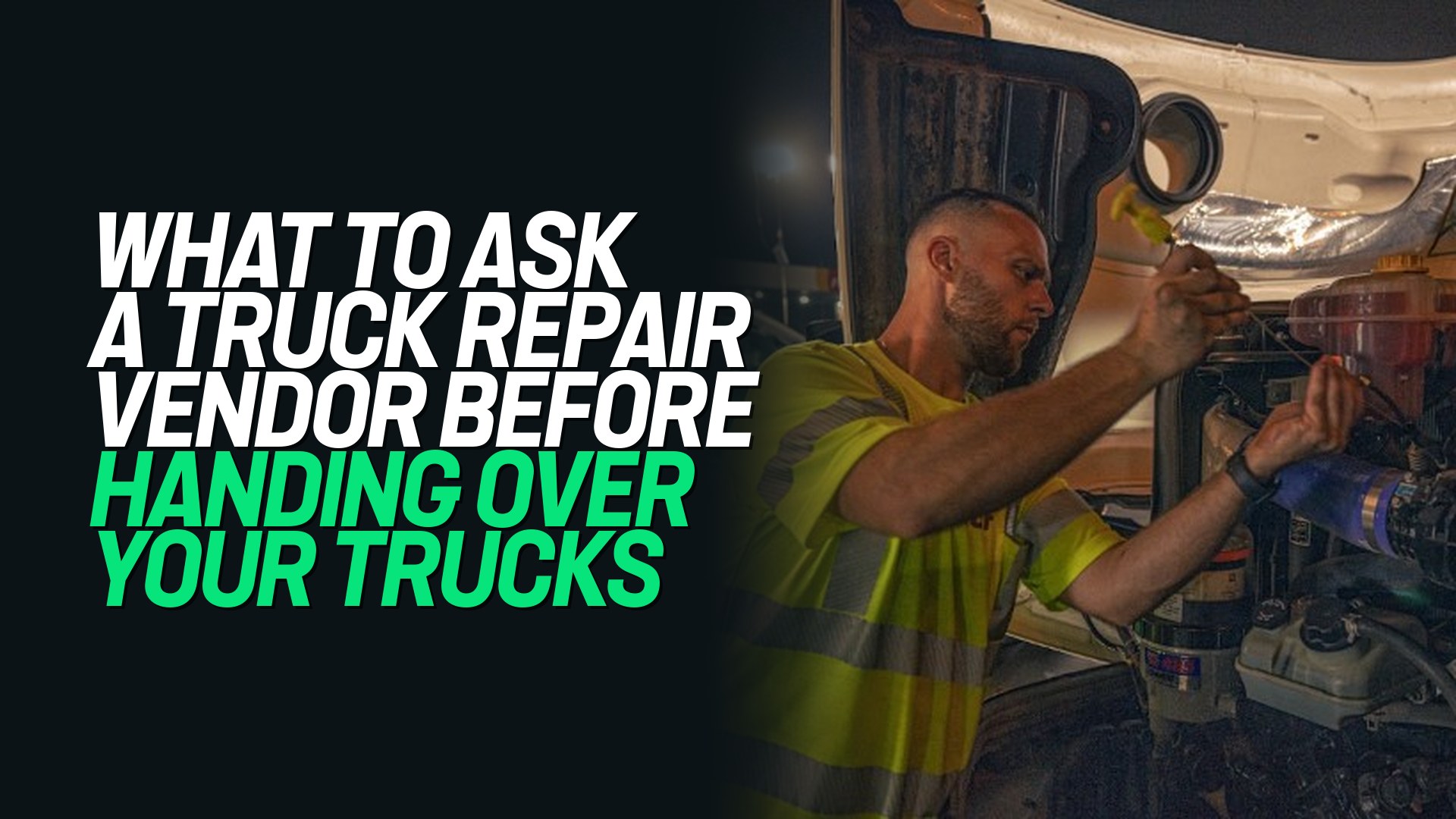
Rey has been a mobile diesel mechanic with Truckup for four years, doing mobile repair in Dallas-Fort Worth and the surrounding areas out of Arlington, Texas. In an industry where technician turnover is a constant problem, four years with the same company is not typical.
He did not find the job through a listing. His brother was already running with Truckup when the company told him they were looking for another tech.
Rey’s brother said he had a sibling who did the same work. Rey started talking with Caleb Markovich, Truckup's CEO. Two weeks later, he was on the job.
Before Truckup, Rey had already been turning wrenches for about 15 years, the last four at Truckup. He started as a kid working on his father's equipment. His dad was an owner-operator, and Rey grew up learning what it took to keep those trucks moving. After high school, he went to Lincoln Tech in Arlington and graduated, then spent years doing roadside work at Love's before making the switch to mobile.
Key Summary: Rey has spent four years as a mobile diesel mechanic for Truckup.
- Truckup dispatches its own techs to the truck. Rey runs the job, no shop handoff.
- Rey works on-site, from brake chambers to the electrical diagnostics many techs skip.
- Most of Rey's repairs are done on-site, though some major jobs still belong in a shop.
- Rey has fifteen years as a mechanic, four with Truckup, after roadside work at Love's
Rey's Daily Routine
Rey's day starts before he arrives on-site. When he gets a job, he calls the driver to get their side of the story and figure out if there are parts he can stop and pick up on the way. For a driver, time is money. The more jobs Rey can finish in a day, the better it is for everyone.
"It's usually trying to talk with drivers, trying to communicate what's what," Rey said. "If not, then just going out there, seeing what I have to do, and then letting the driver know."
He handles everything from brake chambers to full electrical diagnostics. When asked what kind of jobs he prefers, his answer surprises people. Most diesel mechanics dislike electrical work. Rey likes it.
"It's a big challenge," he said. "It's something always different and just that big relief at the end of the day when you figure it out."
It is a lot of schematics, tracing wires, and knowing what everything does. Rey describes it as following a trail.
How Rey Documents a Repair: The Three Cs
On every truck he works, Rey types up what he calls the three Cs. He runs the same notes on preventive maintenance inspections, where the fleet sends him out and he writes up whatever he finds.
- Complaint: what the driver or fleet reports is wrong, in their own words.
- Cause: what the diagnosis turns up, which is not always the same as the complaint.
- Correction: the specific repair made to resolve it.
"Customer states this is wrong with it, this is what caused that issue, and then this is the correction to go ahead and fix it," Rey said.
Because the format stays the same from one job to the next, each truck builds a consistent record the fleet can keep on file. Over time that adds up to a documented maintenance history: what was wrong, what caused it, and how it was fixed.
The Mattress Job
The most intense job Rey has pulled off in four years started when a Jack Cooper truck ran over a mattress on the highway. The mattress wrapped around the driveshaft and ripped out wires, hoses, and airlines on the way in. Springs were scattered across the underside of the truck. The call from the fleet was straightforward: get this truck up and running.
Rey spent two days on it, tracing every wire and figuring out where it went to make sure the harness was rebuilt correctly. Halfway through the job, every wire looked the same.
"Man, I really hope I didn't connect one wrong," he said.
He got the truck running.
Mobile Versus the Shop
Rey is direct about the differences between mobile repair and shop work. Most in-house operations that run a mobile tech still try to refer jobs back to the shop whenever they can. Being 100% mobile changes the incentive. There is no shop to fall back on, so the goal is to get the driver going right there on the spot.
That said, there are limits, and Rey is the first to acknowledge them.
"We're not gonna drop a transmission on the side of 35 in rush hour traffic," he said. "But usually with mobile guys, we try to get you going there on the spot and get you going as quickly as we can."
A Field That Is Aging Out
When people approach Rey at job sites and ask if their kids should go to mechanic school, his answer is mixed. He went to Lincoln Tech, but felt like it was mostly for the credential. They taught him the basics he already knew from years on his father's trucks.
What he recommends instead is finding a shop willing to pay someone to clean up, do oil changes, and work as an extra hand. Getting paid to learn, in his view, matters more than the degree.
He sees the broader picture clearly. Diesel repair is losing people faster than it is replacing them.
"There's less and less younger generations getting into it," Rey said. "A lot of the old school cats, they're [going into] retirement."
When he was at Love's, he had apprentices working under him. Teaching younger mechanics was one of the parts of the job he liked most, and he said he would do it again without hesitation.
Why Rey Stays
Rey sets his own schedule and his own hours. If something comes up, he lets the team know, and they work with him. At a larger company, that kind of flexibility usually means submitting a request and waiting for approval.
The management style has been consistent since the beginning. When Caleb was still handling dispatch personally, it worked the same way.
"Caleb would call me and say, 'Hey, this is the job. Go ahead and go do it,'" Rey said. "'All right, cool. Just give me a call whenever you're done, and we'll collect payment.'"
Four years later, the approach has not changed. Truckup knows he is the mechanic, he knows what he has to do, and he calls when the job is done.
"Truckup has been good to me for these four years."

.avif)