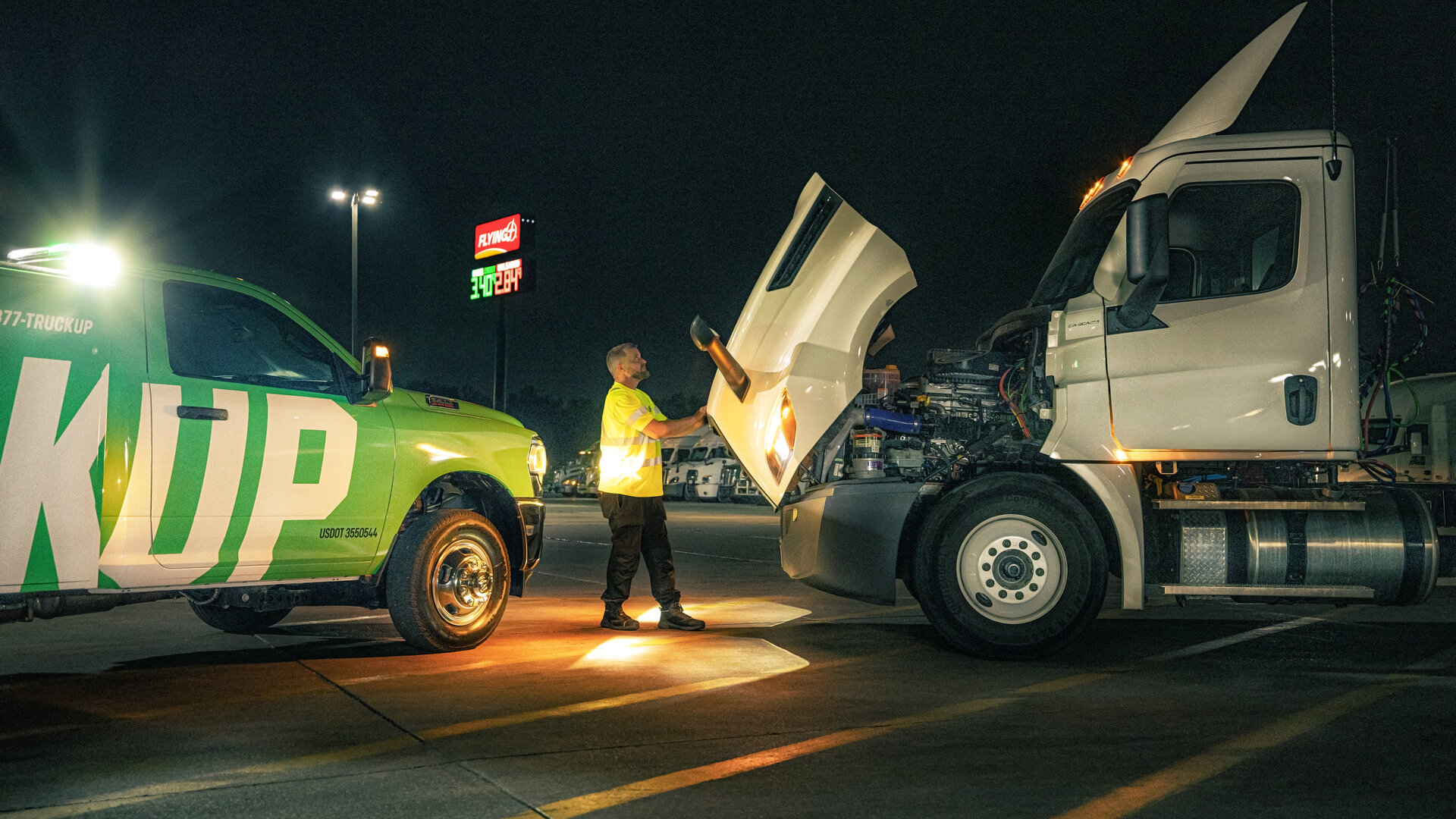
It was 4 a.m. in the morning. Dick Feddersen was outside of Kansas City hauling a 46-foot camper when his tire blew out.
He spent hours calling five shops. Every single one of them either didn’t pick up the phone or refused him.
"I called four or five places, and none of them would come out,” says Dick. “Most wouldn't deal with anything but a semi."
A 3 a.m. Google search for 24/7 roadside mobile repair will most likely lead to dead ends.
Breakdowns don’t follow business hours. They’re going to happen eventually, no matter how much preventative maintenance you do.
All fleet managers should have a procedure to follow as soon as something goes wrong outside of normal business hours, when most semi-truck repair shops are closed.
Checklist Summary: The 6-Step After-Hours Breakdown Protocol
- Secure the scene first: Confirm driver safety, GPS location, and photo verification before dispatching anyone
- Pull your breakdown history: Past repair logs speed up diagnosis and prevent expensive towing mistakes
- Call your pre-vetted vendor, not Google: Dick Feddersen called five shops at 4 a.m. and got refused by all of them
- Demand transparency before authorizing work: Upfront rates, ETAs, timestamps, and repair photos are non-negotiable
- Push for same-night resolution: The difference between "come back tomorrow" and your driver rolling at dawn
- Log everything for next time: Each breakdown builds your vendor database, so the next 3 AM call is easier
Step 1: Secure the Scene (Safety First Protocol)
The first and most important thing is to make sure the driver is safe. Do this before you do anything else.
- Ask: Are you safe? Are hazards deployed? Confirm the driver is pulled over and in a safe location before anything happens with the truck
- Verify GPS location: Use your fleet app or have the driver send you their location pin to confirm their exact location
- Demand photo verification: Ask the driver for real-time photos of the breakdown and the surrounding area
Andy Mason manages a 25-truck Kenworth fleet for Jacobs Engineering in Dallas. His after-hours protocol starts the same way every time:
"You first speak with the driver, so that you can know how bad the situation is,” says Andy Mason. “You ask the driver whether he or she is safe at that particular time, if there are any hazards that have been deployed."
What Questions Do You Ask a Driver Stranded on the Road During a Breakdown?
Ask your driver these questions as you’re securing the area and ensuring their safety:
- Are you safe right now? Confirm the driver isn’t in immediate danger
- Have you deployed all hazards (flares, triangles, reflective gear)? Verify FMCSA compliance and collision prevention
- What's your exact GPS location? Enables driver dispatch ASAP
- Send photos now: truck, damage, surroundings. Provides visual diagnosis, rules out exaggeration or misdiagnosis
Don’t: Driver's Word Without Visual Confirmation
Without driver verification, a GPS location, and photos, dispatching decisions are based on incomplete information. You can't:
- Dispatch the right mechanic to deal with the problem
- Decide whether they need a tow or mobile roadside repair
- Take steps to protect the cargo
Key regulations to know for overnight breakdowns:
- FMCSA emergency warning device rules: Drivers must place three reflective triangles within 10 minutes of stopping: At 10 feet, 100 feet, and 200 feet behind the vehicle on divided highways. On two-lane undivided roads, one goes 100 feet in front as well; near curves or hills, extend the furthest triangle to 500 feet.
- Move Over Laws vary by state. Texas requires moving over one lane or slowing 20 mph below the posted limit; Missouri and Kansas require moving over or slowing to a safe speed. As of September 2025, Texas expanded its law to cover any vehicle displaying flashing warning lights, not just emergency vehicles.
- Shoulder risk increases at night. Confirm the vehicle is fully clear of the travel lane. If it's partially in the lane or on a narrow shoulder, escalate to a tow rather than waiting for mobile repair.
Step 2: Diagnose Using History Logs
Draw on your vehicle and driver data and get some historical context. Has the vehicle had breakdowns before? Does the driver’s description match the vehicle's symptoms?
Once you do know what you’re dealing with, you can decide whether the vehicle needs a tow or a roadside repair.
Steven David, Co-Founder & CEO at EZ Movers and Storage, keeps this information on hand so he can act with clarity and precision, not with his gut.
"I keep an extensive history of past breakdowns that includes the truck model, symptom, and repair time to make diagnosis and decision-making quicker,” says Steven.
Don’t: Making Split-Second Decisions Without Data
Fernando Castro, owner of Mega Trucking in Houston, TX, once had a radiator leak that a Truckup tech was able to fix on-site because they worked through the night. He knew he could rely on Truckup because they regularly service his fleet and help with breakdowns.
Without that historical context, fleet managers have to resort to expensive and time-consuming towing, rather than quick and efficient mobile roadside repairs.
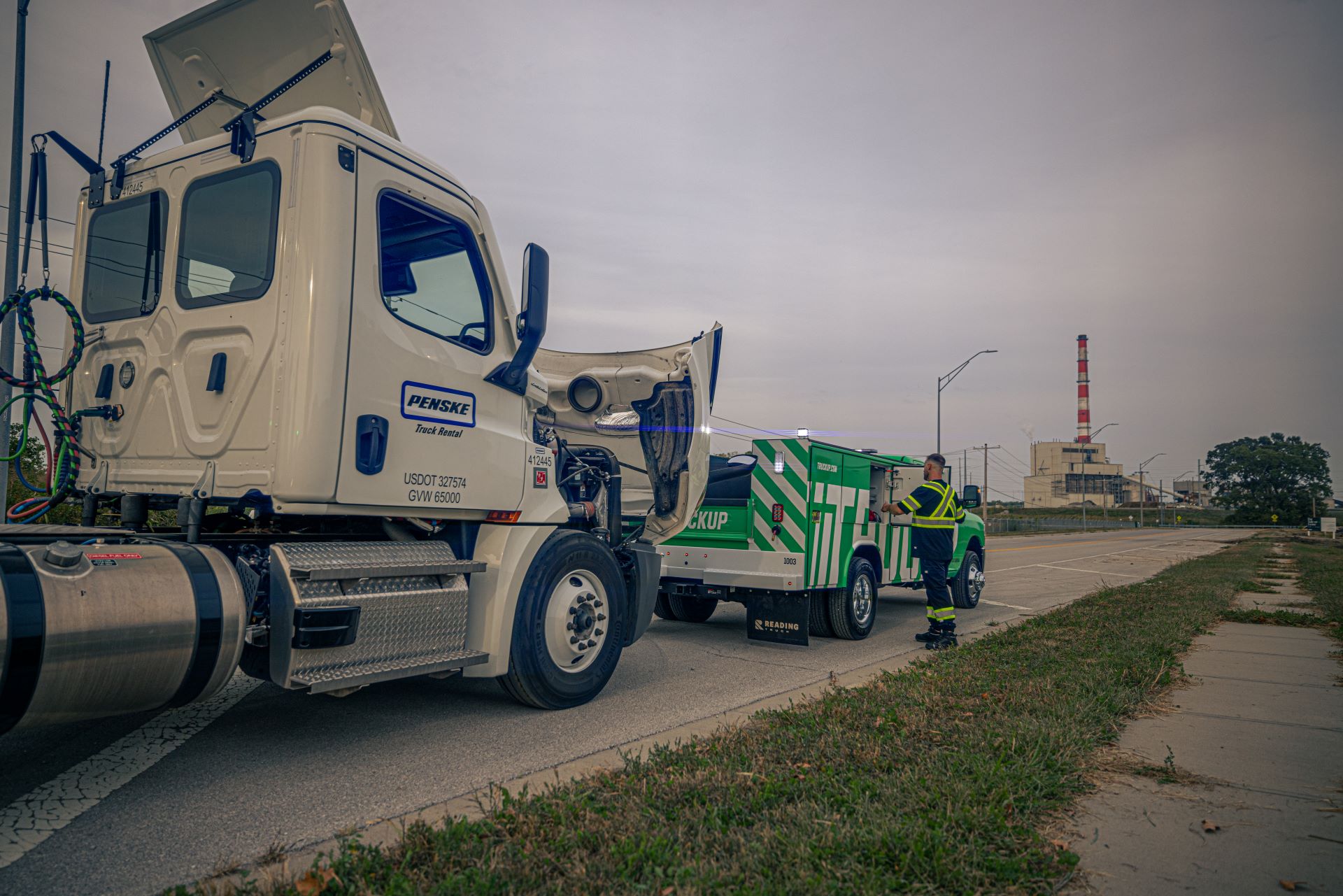
Repairs a mobile tech can handle on-site:
- Tires: Flats, punctures, replacements; common roadside fix
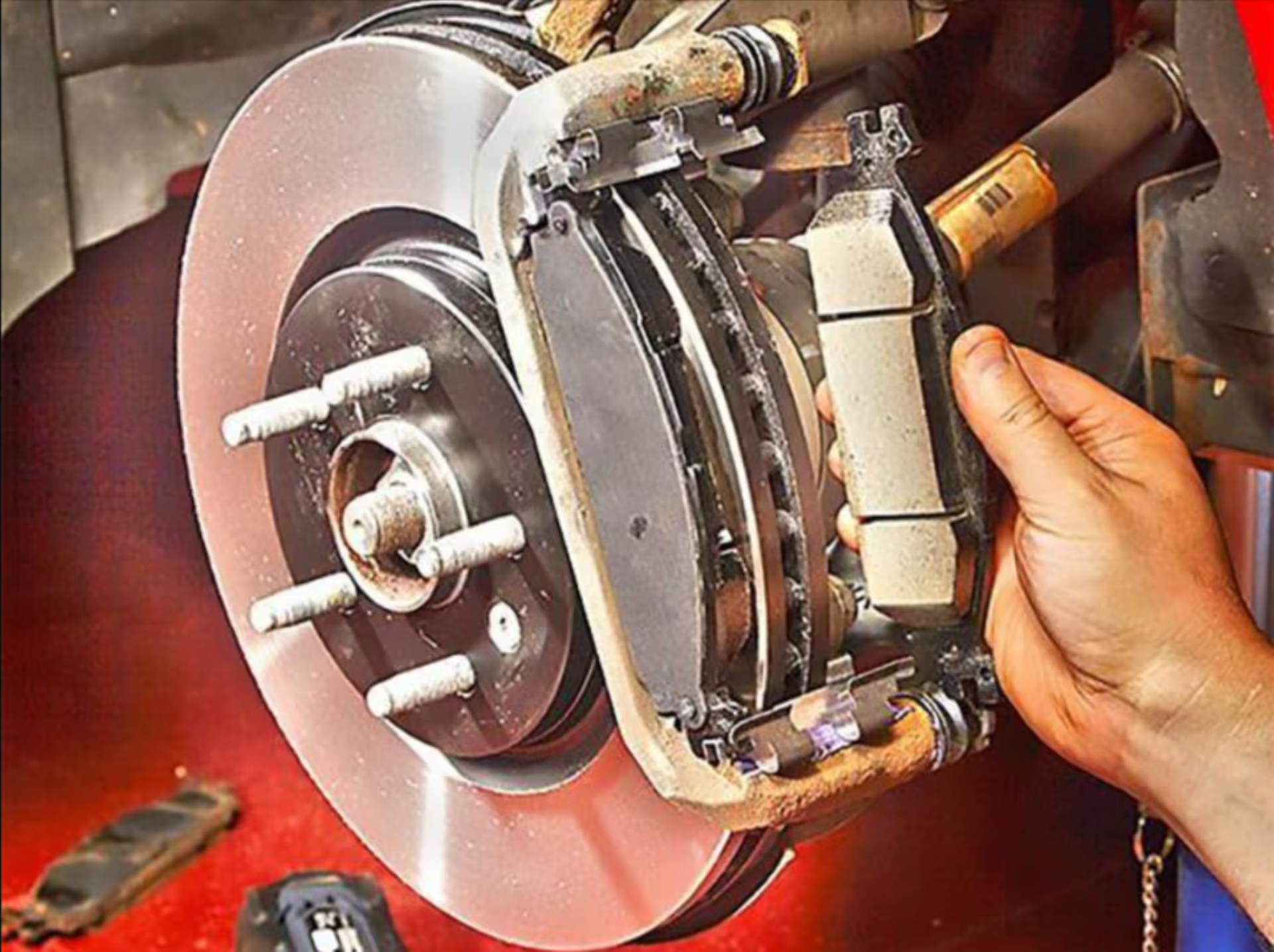
- Brakes: Minor adjustments, air leaks, and DOT fixes
- Hydraulics: Hose leaks and replacements
- Radiator/Cooling: Leaks repaired overnight on-site
- Electrical/Battery: Diagnostics, jumps, and minor wiring
- Fuel System: Filters, injectors, pumps
When you need a tow instead:
- Major Engine/Transmission: Overhauls and rebuilds need shop equipment
- Frame/Axle/Suspension: Structural damage requires heavy lifts
Step 3: Deploy a Pre-Vetted Vendor
A pre-vetted vendor list - mobile roadside mechanics, towing companies, dispatchers, etc. - eliminates the worst variable in an overnight breakdown: scrambling for help under time pressure.
- If possible, text or call their direct line. You need to speak one-on-one with a person, not a bot or a voicemail message.
- Confirm GPS tracking. Make sure the vendor can update you on the tech’s location en route.
- Set ETA expectations. Get a definite answer from the vendor on arrival time and parts availability.
Kea Wanamaker, fleet manager for WillScot Mobile Mini Holdings in Kansas City, has an SOS protocol from Truckup dispatcher David Pitman. She gave David’s number directly to her driver so they can contact him at any time. They can text him at 5 a.m. and have their trucks back on the road by 7 a.m.
“I used to call him on the phone,” says Kea, “And now I'm like, SOS David, can you help? And he immediately says, ‘Yes’."
Don’t: Trusting Vendors Without GPS Tracking
The vendor you send to deal with the problem has to be your eyes and ears on the ground.
Andy Mason makes a point not to work with vendors who can’t send repair photos, timestamps, and work summaries automatically. Pre-vetted lists of people and companies beat a frantic early-morning Google search any day.
Step 4: Communicate With Transparency
Once you choose a vendor, insist on transparent pricing upfront. You need to know how much you’re paying and what you’re paying for.
Ask for real-time updates. Have them send photos of the damage, repair progress, and an estimated timeline to completion.
Log everything you can. Keep a record of GPS timestamps, repair photos, and invoices. This is all the data you can use to save you time, money, and stress when the next breakdown happens.
“Look at their pricing transparency,” says Andy. “If they have a flat rate or standardized billing, [that means] there are no surprises.”
“We’ll be there soon” is not an ETA. When Fernando Castro called Truckup for help with his radiator leak, he was told “between 5 and 6,” and the tech arrived exactly when promised.
Step 5: Resolve Overnight to Save the Load
Push for same-night resolution, if you can.
Typical mobile mechanic rates fall in the $80–170/hour range (AutoNation Mobile Service), with after-hours and weekend calls carrying a premium. That's still often cheaper than a tow plus shop diagnostics for on-site fixes.
If you miss the delivery, detention fees for standard freight range from $50–90 per hour (Fortune Carriers), with specialized or hazmat loads reaching $125/hour.
Authorize the driver to roll out at first light. If it gets fixed at midnight, they roll out at dawn.
Once the situation is resolved, document any avoided losses. Track what delaying the delivery would have cost you, so you can track an ROI to mobile roadside repair.
Overnight resolution is not a luxury. It’s the difference between making a delivery and losing a service contract.
Don’t accept “come back tomorrow” for an answer. A shop can have you waiting around for 7-10 days, and your losses compound the longer you’re kept waiting. A mobile roadside repair with a competent tech can compact that into hours.
Step 6: Close the Loop With a Post-Breakdown Debrief
Update your breakdown history database once the situation is resolved. Add notes on any new failures, the vendor’s performance, and resolution time.
Rate the mechanic’s performance. Include their response time, their transparency, and the quality of their work.
Share the experience with your network. If the vendor delivered on their promises and helped you, tell the other fleet managers, dispatchers, and owner-operators you work with. You never know who it might help save in a jam.
Steven David treats every breakdown as a valuable lesson.
“Each breakdown adds valuable information to my list of reliable vendors,” says Steve. “[That way] I always know who can perform a quick repair without losing hours.”
Building the Protocol Before You Need It
Every step you take during an after-hours breakdown prevents a critical failure point. This sequence is drawn from fleet managers running 25 to 1,000+ truck operations.
The difference between having this checklist and not having it can mean saved loads, thousands of dollars in contracts, and even lives.
The next 3 a.m. breakdown is a matter of when, not if. Having this protocol documented and accessible to your team before it happens is the difference between a managed incident and an expensive scramble.
.avif)