
Looking ahead to 2026, fleet managers, truck owners, and heavy-duty drivers need strategies that proactively prevent unexpected breakdowns. Trucks operating year-round face challenging weather conditions like scorching summer heat and freezing winters. To navigate through, you need to weatherproof your semi-trucks to ensure they operate smoothly, regardless of the weather.
This requires proper planning to minimize downtime, maintain schedules, and foster a positive environment for drivers while safeguarding your bottom line.
Relying on reactive maintenance that often leads to costly delays and increased pressure on your fleet, and embracing a proactive maintenance approach is key. This strategy will help you identify potential issues before they escalate into serious problems and include them during routine preventive servicing, which keeps trucks in optimal condition and reduces the likelihood of sudden failures.
Mobile truck repair services are another strategy that can help you have your heavy-duty trucks fixed on-site, reducing the need to tow them to the nearest truck repair shop. Collaborating with a reliable mobile repair service provider will help you beat downtime, avoid towing costs during emergency breakdowns, and keep your fleet operational.
This guide will detail effective implementation strategies for 2026, highlighting ways to keep your fleet running efficiently, safely, and profitably, while ensuring that drivers feel confident and well-supported as they navigate their routes.
Catch Problems Before They Happen With Predictive Maintenance
Some mechanical issues stay hidden for a while, until they suddenly cause major failures that take a truck off the road. Predictive maintenance changes that story. It’s a data-driven approach that helps fleets detect early signs of trouble long before they disrupt operations.
Instead of waiting for warning lights or relying solely on fixed service intervals, predictive maintenance uses real-time data, sensors, telematics, and diagnostic reports to forecast when a component is likely to fail. This allows fleet managers to address minor issues early, before they escalate into costly roadside breakdowns.
For fleet managers and truck owners, predictive maintenance is one of the most effective ways to reduce downtime in 2026. By monitoring indicators such as engine performance, fuel efficiency, temperature fluctuations, brake wear, battery health, and vibration patterns, you’ll receive early alerts when something isn’t functioning as expected. This allows you to schedule repairs while the truck is still operational, instead of losing hours or days to emergency fixes.
How Fleets Can Embrace Predictive Maintenance
1. Embrace Telematics and Onboard Sensors
Investing in telematics systems and smart sensors is essential for optimizing predictive maintenance. These remote technologies for fleets monitor critical factors, including engine load, temperature, battery voltage, fuel consumption, tire pressure, vibration levels, and brake wear.
By continuously tracking this data, you can identify unusual patterns that may indicate potential issues early on, allowing you to address them before they lead to unexpected breakdowns on the highway.
2. Review Diagnostic Data Consistently and not Occasionally
Make it a habit to review diagnostic data consistently, rather than doing it sporadically. For predictive maintenance to be effective, fleets should establish a routine for analyzing diagnostic reports on a daily or weekly basis.
Even minor changes, such as a slight increase in engine temperature or a decrease in fuel efficiency, can indicate potential issues like coolant leaks, clogged filters, injector faults, or worn components. You can use a remote diagnostic tools to monitor and review different components of your trucks. Regular monitoring can help catch these problems early, ultimately enhancing fleet performance and reducing downtime.
3. Set Automated Alerts for Abnormal Behavior
Implement automated alerts for abnormal behavior to enhance your fleet's efficiency and optimize operations. Your telematics platform can provide instant notifications when critical indicators fall outside of normal ranges, such as:
- Engine overheating
- Sudden drops in oil pressure
- Abnormal vibration levels
- Accelerated brake wear
- Battery voltage fluctuations
These proactive alerts empower fleet operators to address minor issues promptly, minimizing the risk of downtime and ensuring smooth operations.
4. Integrate Telematics Data into Your Fleet Management System
To enhance your fleet management system, integrating telematics data can be highly beneficial. When predictive insights are aligned with dispatch, routing, and scheduling, you can achieve several advantages:
- Strategically plan repairs as your truck approaches a workshop.
- Proactively assign alternative trucks to minimize delays.
- Synchronize maintenance timing with driver schedules and cargo demands.
By implementing these practices, you can effectively prevent last-minute disruptions and improve overall efficiency.
5. Replace Static Schedules With Dynamic, Condition-Based Servicing
Embrace dynamic, condition-based servicing over static schedules to enhance efficiency and safety, rather than adhering to a fixed “service every 10,000 km” guideline. Condition-based maintenance tailors servicing to the actual usage of the truck in the real world. For instance, if the vehicle is carrying heavy loads, it’s beneficial to schedule service earlier. Conversely, for lighter city routes, servicing intervals can be extended.
Additionally, in harsh weather conditions or challenging terrains, implementing pre-season checks can be invaluable. This flexible approach not only helps reduce costs but also maximizes uptime, ensuring that trucks remain safe and reliable on the road.
6. Train Drivers to Report Symptoms Early
Cultivate a culture of communication among your drivers, encouraging them to provide detailed reports on their vehicles' performance. Since truck drivers have a close connection with their trucks, their insights are incredibly valuable. It’s essential for them to feel empowered to share observations such as:
- Unusual sounds
- Delayed braking
- Power loss
- Warning lights
- Strange smells or vibrations
By actively sharing these observations, along with any predictive data they may have, we can achieve a thorough understanding of vehicle health and promote safer operations.
7. Collaborate With a Trusted Mobile Truck Repair Provider
Implementing predictive alerts can significantly reduce breakdowns, yet unforeseen issues may still arise. Partnering with reliable mobile truck mechanics bridges this gap by offering prompt, on-site repair assistance. This collaboration benefits fleets in numerous ways:
- Address identified issues swiftly
- Mitigate minor problems before they escalate
- Eliminate costly towing delays and emergency expenses
Overall, this partnership fosters an effective cycle of proactive and responsive maintenance, enhancing vehicle reliability and efficiency.
Preventive Maintenance: Keep Trucks Reliable with Routine, Scheduled Care
If you want to stay ahead of weather-related issues and the wear that comes from rough rural roads, preventive maintenance is your most reliable safety net. Instead of waiting for a truck to break down, preventive maintenance is all about giving your trucks regular, structured care before problems arise.
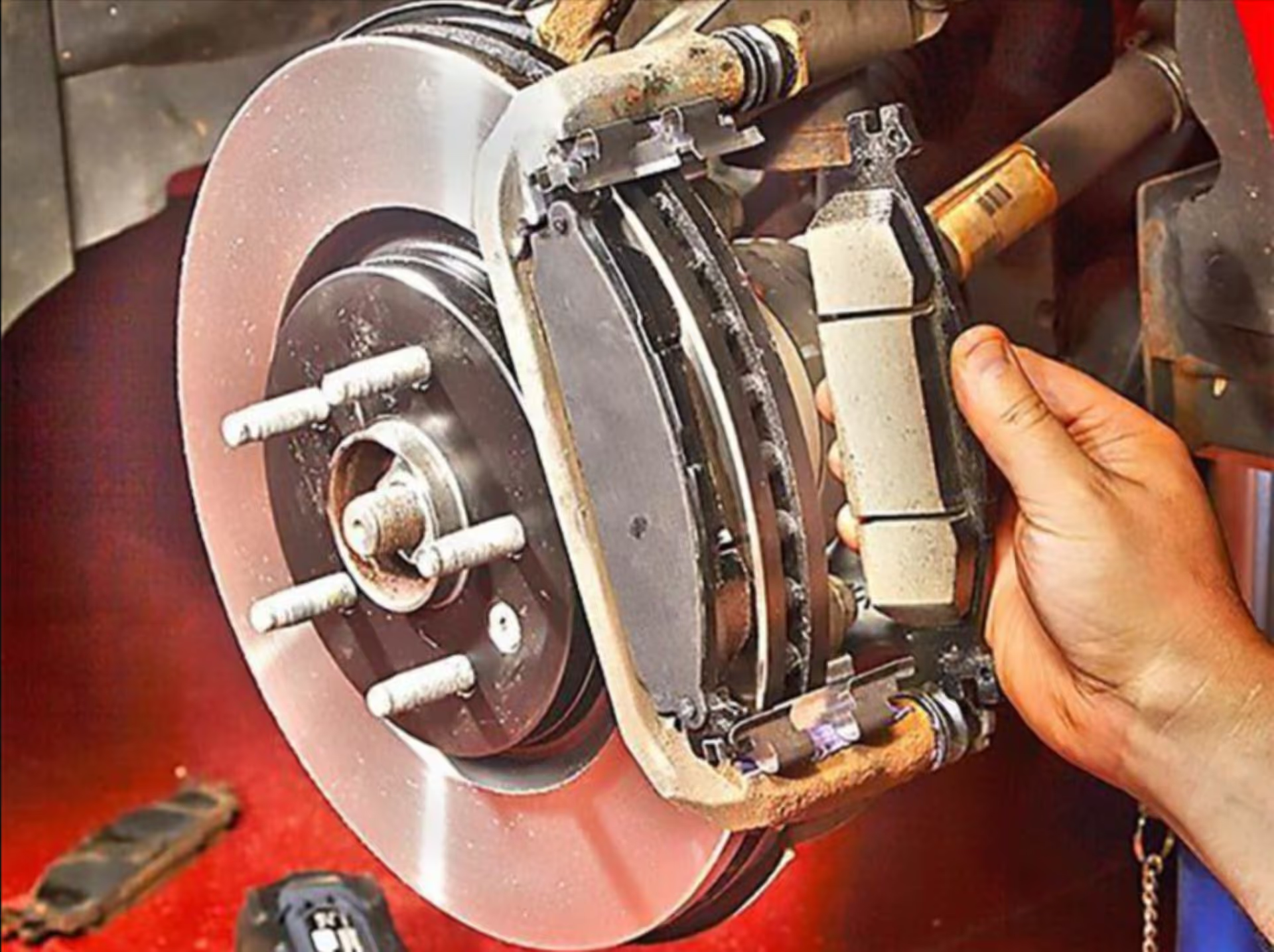
Think of it as the routine health check that keeps your fleet steady. This includes scheduled inspections, fluid and filter changes, brake checks, tire rotations, and system diagnostics, all designed to prevent minor issues from becoming breakdowns that cost you time, money, and driver trust.
For fleet managers and truck owners, this approach ensures a smooth operation throughout the year. It helps you avoid surprise failures, lowers repair bills, and gives you more control over when trucks go in for service. That means fewer last-minute emergencies and more predictable operations.
Preventive maintenance also enhances uptime across all types of terrain and seasons. Trucks that receive consistent servicing are better equipped to handle long-haul routes, bumpy countryside roads, and extreme heat or cold, resulting in fewer problems. And when trucks stay reliable, drivers stay confident, schedules remain intact, and customers stay happy.
How Fleets Can Embrace Preventive Maintenance
1. Build a simple, realistic maintenance schedule
Create a straightforward and practical maintenance schedule. Focus on establishing time-based or mileage-based intervals for inspections, fluid changes, and system checks. The key to success is maintaining consistency in your approach.
2. Keep accurate service records
Maintaining detailed service records is essential. By documenting service history, you can identify patterns, such as a truck that often requires brake repairs or one that tends to wear out tires more quickly than others. Having this data at your disposal can greatly simplify decision-making and enhance your overall maintenance strategy.
3. Standardize checklists for every truck
Establish standardized checklists for all trucks. By implementing comprehensive checklists that cover engine inspections, belts and hoses, tires, lights, and brakes, you can ensure that your team stays aligned and minimizes the risk of overlooking essential steps in the maintenance process. This proactive approach not only enhances overall safety but also promotes operational efficiency.
4. Train drivers to report early warning signs
Establishing relationships with trusted technicians or mobile mechanics who understand the unique needs of your fleet can be invaluable. Reliable partners can minimize downtime and facilitate quicker scheduled maintenance, enhancing overall efficiency.
5. Use maintenance management software (even a basic one)
Even a basic maintenance management system can yield significant benefits. Simple digital tools can help you track maintenance schedules, automate reminders, and ensure that essential service tasks don’t slip through the cracks. Investing in such tools can streamline your operations effectively.
6. Build Partnerships with Reliable Service Providers
Establishing relationships with trusted technicians or mobile mechanics who understand the unique needs of your fleet can be invaluable. Reliable partners can minimize downtime and facilitate quicker scheduled maintenance, enhancing overall efficiency.
7. Integrate Preventive and Seasonal Checks
Incorporate a brief checklist of seasonal inspections ahead of significant weather changes, such as the rainy season, extreme heat, or cold spells. This small yet strategic step can significantly reduce the risk of complications and ensure smoother operations throughout the year.
Mobile Truck Repair: Reliable Support When Breakdowns Still Happen
Even with strong predictive and preventive maintenance in place, breakdowns are still part of fleet life, especially when your trucks run long routes, haul heavy loads, or face harsh realities like muddy rural roads, pothole-ridden terrain, unpredictable weather, or steep hills. That’s precisely where mobile truck repair becomes a key piece of your uptime strategy.
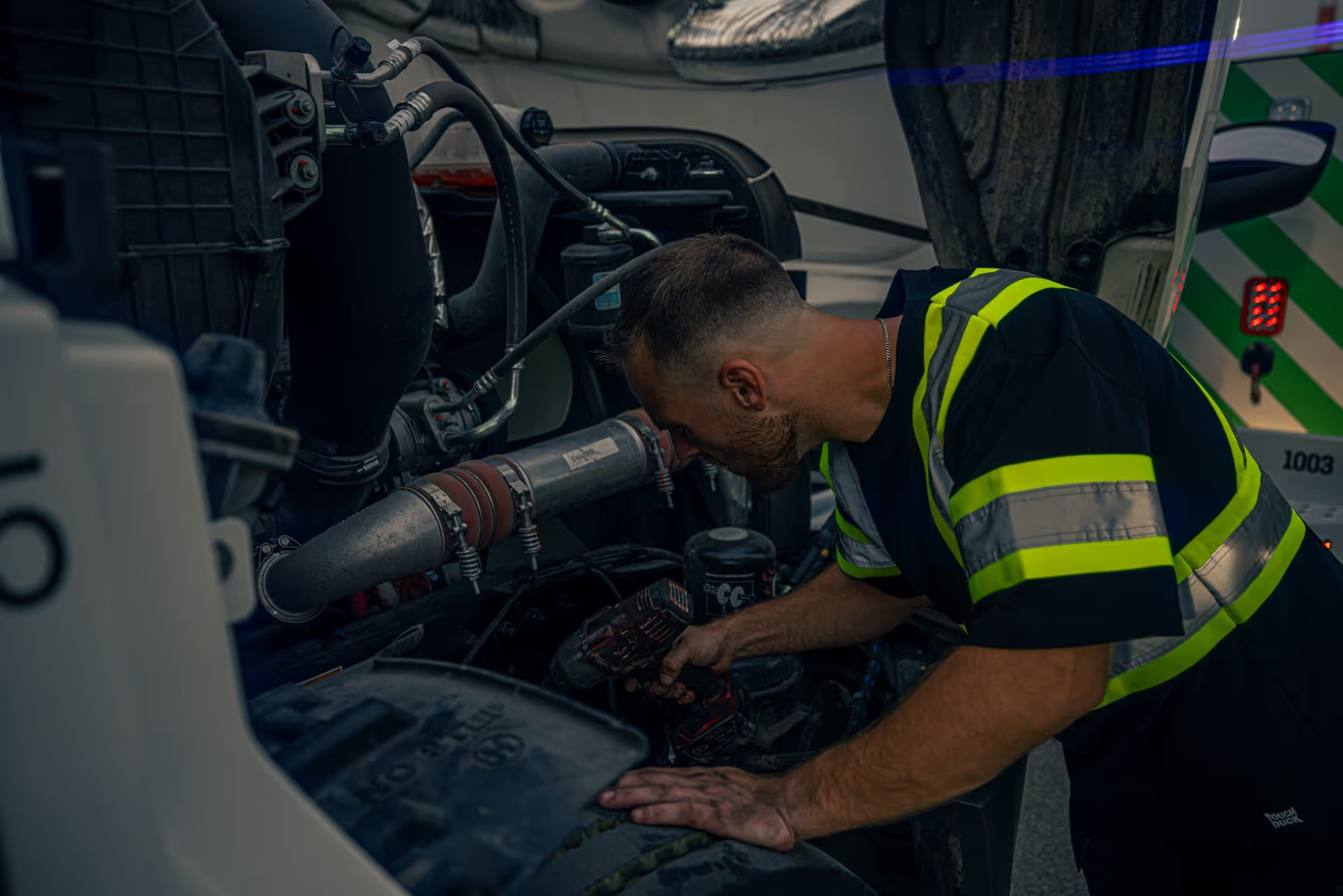
Instead of waiting hours for a tow truck or losing a full day in the shop queue, mobile repair services send trained technicians directly to your driver, whether they’re stuck on a remote farm road, an industrial loading zone, a construction site, or a busy highway shoulder. It’s fast, efficient, and designed to keep your schedule intact.
For fleet managers and truck owners, mobile repair is more than convenience; it’s a safety net. It reduces downtime, protects drivers, and prevents minor issues from escalating into costly failures that can take trucks offline for days.
Why Mobile Repair Matters for Fleet Uptime
1. Faster response when emergencies strike, no towing, no long waits
A mobile mechanic goes straight to where the truck stopped. That eliminates towing delays and dramatically shortens recovery time.
Speed matters most on routes where weather, poor visibility, or road conditions are unpredictable. Quick roadside assistance can be the difference between meeting delivery windows and losing contracts due to repeat delays.
2. Better protection for drivers in unsafe or extreme environments
Breakdowns often occur in high-risk areas, on narrow shoulders, in unfamiliar towns, on nighttime highways, or during harsh weather conditions.
Mobile repair reduces the time drivers spend exposed to:
- Fast-moving traffic
- Heavy rain or heat
- Unsafe rural areas
- Wildlife or isolated terrain
Quick arrival means less stress for drivers and fewer safety incidents.
3. Immediate fixes prevent bigger and more expensive failures
Most breakdowns begin as minor, manageable issues, such as loose belts, clogged filters, weak batteries, minor leaks, sensor faults, or overheating.
When minor problems are handled quickly on-site, fleets avoid:
- Engine damage from overheating
- Full brake system failures
- Electrical shorts that knock out multiple systems
- Cascading damage caused by continued driving
Mobile techs help fleets prevent minor issues from escalating into multi-day shop jobs.
4. Ideal for minor repairs, diagnostics, and rapid inspections
Mobile repair teams can handle tasks like:
- Jumpstarts and battery replacements
- Cooling system service
- Air brake and airline work
- Tire changes or repairs
- Electrical and lighting faults
- Sensor resets and replacements
- Fluid refills and leak checks
- On-site engine diagnostics
These quick interventions help determine whether the truck can safely continue its route or if it should be scheduled for a controlled shop visit, giving fleets more control over downtime.
5. Keeps operations running smoothly with minimal disruption
Mobile repair helps fleets avoid:
- Major route changes
- Late or missed deliveries
- Extended downtime in the shop
- Unhappy drivers
- Costly emergency towing
For fleets operating on tight margins and time-sensitive routes, this stability is enormous. It allows dispatchers to keep loads moving and prevents customer dissatisfaction caused by recurring delays.
Wrapping Up: How Predictive, Preventive, and Mobile Repair Work Together in 2026
As we look towards 2026, effective fleet management will increasingly rely on the integration of predictive, preventive, and mobile repair strategies, rather than relying solely on a singular maintenance approach. Each of these maintenance methods plays a vital role in creating a cohesive and proactive maintenance framework.
- Predictive maintenance provides early warning. Sensors, telematics, and diagnostic tools detect potential issues, such as engine overheating, brake wear, or battery dips, before they escalate into breakdowns. Early detection enables fleet managers to schedule repairs at the optimal time, thereby minimizing unexpected downtime.
- Preventive maintenance complements predictive insights by ensuring routine care is performed on every truck. Scheduled inspections, fluid changes, brake servicing, and seasonal checks reduce common failures that predictive systems might not flag, creating a reliable baseline for daily operations.
- Mobile repair fills in the gaps when unexpected issues arise. Even with predictive alerts and preventive routines, trucks can face sudden challenges on long hauls or tough routes. Mobile mechanics reach drivers immediately, performing on-site repairs to prevent minor problems from escalating into costly downtime.
- How they work together: predictive maintenance identifies potential failures early, preventive maintenance keeps trucks consistently reliable, and mobile repair provides fast solutions when the unexpected occurs. The synergy of these three strategies means fewer breakdowns, faster response times, happier drivers, lower costs, and longer vehicle life, keeping fleets efficient and profitable in 2026 and beyond.
For fleet managers and truck owners looking ahead to 2026, adopting this integrated maintenance approach isn’t optional; it’s essential. By embracing predictive insights, adhering to preventive maintenance schedules, and leveraging mobile repair support, fleets can operate efficiently, reduce costs, and maintain a safe and satisfied workforce.
In short, predictive, preventive, and mobile repair strategies not only complement each other but also create a resilient, proactive maintenance system that transforms how fleets manage vehicles, drivers, and operations. Implementing all three ensures your fleet stays ahead of breakdowns, maximizes uptime, and remains profitable in an increasingly demanding transportation landscape.
.avif)