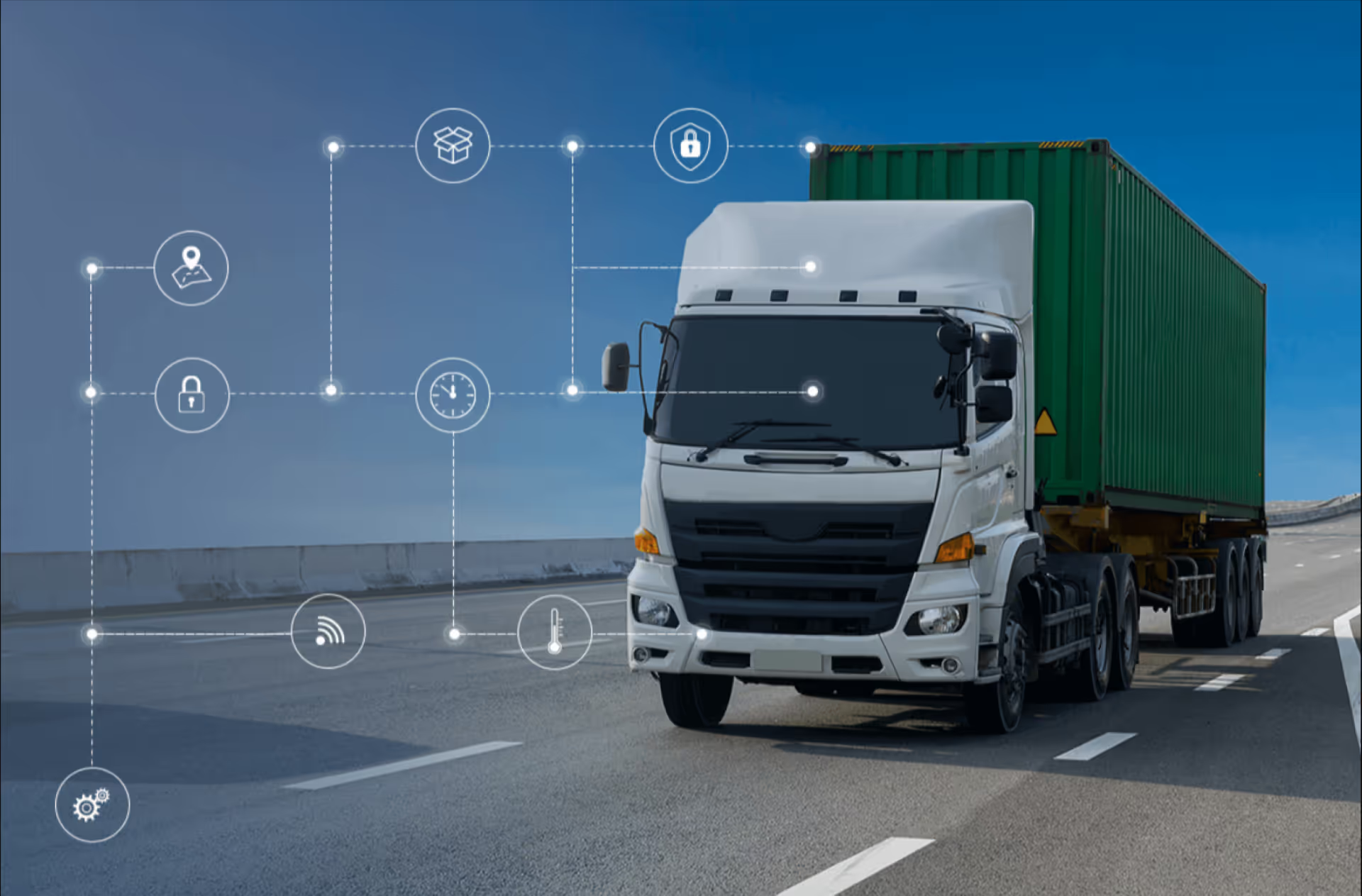
Keeping a fleet on the road is expensive. Between unexpected breakdowns, costly repairs, and compliance demands, you may constantly put out fires instead of focusing on efficiency as a fleet manager. Traditional maintenance programs built on manual inspections and paper records fail to keep up with today’s pace of operations.
That’s where remote technologies come in. From telematics and IoT sensors to AI-powered predictive analytics, these tools transform fleet maintenance from a reactive, manual process into a data-driven, proactive strategy.
This article will explain how remote technologies streamline fleet maintenance operations, why they matter, and the measurable benefits you can expect.
Why Your Fleet Maintenance Program Needs an Upgrade
Fleet operations are the backbone of logistics, delivery, and transportation. However, relying on outdated maintenance strategies, such as waiting until trucks show visible signs of wear, puts your business at risk. This reactive approach leads to unexpected breakdowns, higher repair costs, and delayed schedules.
Here’s why upgrading your fleet maintenance program with remote technologies isn’t just a smart move; it’s becoming essential for reducing downtime, controlling costs, and improving overall fleet performance.
- Reduce Unplanned Downtime
Every hour a truck is stuck on the roadside or in the workshop translates to missed deliveries, delayed schedules, and unhappy customers. Remote monitoring gives you early alerts on potential failures, helping you schedule repairs before they cause downtime.
- Lower Repair and Replacement Costs
Fixing minor issues early is always cheaper than replacing entire systems. Remote diagnostic tools can help you spot wear and tear quickly, allowing you to budget smarter and avoid major repair bills. - Improve Fuel Efficiency and Extend Vehicle Lifespan
Poorly maintained trucks waste fuel and wear out faster. Monitoring performance metrics can cut fuel costs and extend the life of your vehicles. - Make Data-Driven Maintenance Decisions
Guesswork is expensive. Remote technologies provide actionable data on vehicle health, enabling you to plan maintenance, spot recurring problems, and optimize your fleet’s overall performance.
- Manual tracking invites errors. Many fleet managers still use paper logs, spreadsheets, or outdated systems. This manual approach increases the risk of overlooked service dates, inaccurate mileage reporting, and inefficient resource allocation.
- Poor maintenance raises safety and compliance risks. A neglected fleet is not only unreliable but also unsafe. Missed inspections or delayed repairs can put drivers and cargo at risk while exposing businesses to regulatory fines and insurance hikes. An effective remote technology that tracks tire pressure, braking performance, and engine health reduces the risk of roadside emergencies and keeps drivers confident behind the wheel.
That’s where remote technologies help fleets automate diagnostics, detect issues before breakdowns happen, precisely schedule repairs, and maintain detailed digital records for compliance.
How Remote Tools Are Reshaping Fleet Maintenance Operations
1. Real-Time Condition Monitoring: From Calendar to Condition
Traditional fleet maintenance strategy follows a fixed schedule for servicing, such as every 10,000 miles or every six months. While this method works, it often creates two problems: unnecessary maintenance that wastes resources or overlooked issues that develop between service intervals.
Remote technologies are changing that. With telematics and IoT-powered sensors, you can monitor critical components in real time, including:
- Tire pressure and tread depth to prevent blowouts and improve fuel efficiency.
- Oil life and engine temperature to catch overheating or lubrication issues before they cause engine damage.
- Battery voltage and fluid levels to reduce the risk of unexpected starting failures or costly electrical breakdowns.
When the system detects unusual wear, low levels, or a fault code, it sends instant alerts. This allows technicians to schedule repairs proactively instead of reacting to roadside failures.
With this approach, your fleet maintenance strategy can move from calendar-based to condition-based maintenance, ensuring vehicles get the right care at the right time. This shift means:
- Fewer unnecessary preventive services.
- Earlier detection of hidden issues.
- Extended vehicle lifespan and more uptime on the road.
As a fleet manager, embracing real-time condition monitoring can help reduce downtime, control costs, and keep trucks road-ready with greater precision.
2. Predictive Maintenance: Fix it Before it Fails
Reactive maintenance fixes problems after they happen, while preventive maintenance relies on fixed schedules.
In contrast, predictive maintenance goes further by using real-time data, analytics, and machine learning to forecast when a part is likely to fail.
Remote platforms analyze historical breakdown records alongside current vehicle performance. Each potential issue is assigned a risk score and a projected time-to-failure, giving fleet managers a clear picture of what needs attention first.
Here’s how predictive maintenance makes fleet operations smarter:
- Work orders are prioritized by urgency, ensuring critical issues are fixed before they cause downtime.
- Parts can be ordered in advance, eliminating delays from last-minute sourcing.
- Repairs are scheduled during planned downtime, reducing disruptions to routes and deliveries.
Take this scenario: A cooling system sensor shows abnormal readings- Instead of waiting for the truck to overheat on the road, the system projects a likely failure within 500 miles. It then triggers an alert and auto-schedules servicing at the next layover. The driver keeps moving, the truck avoids roadside breakdown, and the fleet saves thousands in emergency repairs.
With predictive maintenance, fleets move from guesswork to precision, reducing repair costs, extending component lifespan, and ensuring vehicles spend more time generating revenue, not sitting in a shop.
3. Remote Diagnostics & Over-the-Air Updates
When the check engine light comes on, fleets no longer need to wait until a truck reaches the shop. With remote diagnostics, managers can instantly read fault codes and assess whether the problem is urgent or can be scheduled for later.
Over-the-air (OTA) software updates can often resolve issues without a shop visit, saving time and money.
The result is fewer interruptions, less stress for drivers, and more trucks staying on the road instead of sitting idle in repair bays.
4. Smart Scheduling Around Routes & Hours of Service
One of the biggest inefficiencies in fleet maintenance is pulling trucks off the road at the wrong time. Smart scheduling tools solve this by integrating with GPS, electronic logging devices (ELDs), and shop availability to book service during natural breaks.
For example, if a preventive maintenance check is due within 300 miles, the system reviews the driver’s ELD data, identifies a rest stop in Kansas City with a partner shop, and schedules the service during the required rest period.
The result is fewer disruptions, better compliance with hours-of-service rules, and maximum uptime without adding stress to drivers or dispatchers.
5. Digital Inspections (eDVIR) for Faster Defect Resolution
As a fleet manager or truck operator, you know that drivers are the first line of defense when catching problems early. A loose belt, a worn tire, or a fluid leak often appears on a pre- or post-trip inspection before it becomes a costly breakdown.
The paper-based DVIRs (Driver Vehicle Inspection Reports) are slow, easy to lose, and often sit in the office before anyone takes action. By the time a mechanic sees the report, that “small issue” might have already escalated into roadside downtime.
That’s where digital DVIR (eDVIR) apps step in. With just a smartphone or tablet, drivers can:
- Record defects with photos and videos so mechanics see exactly what’s wrong.
- Submit reports instantly instead of waiting for paperwork to be processed.
- Automatically trigger work orders so repairs are scheduled without delay.
This creates a real-time feedback loop between drivers, managers, and mechanics, resulting in faster defect resolution, fewer missed repairs, and better compliance with DOT inspection requirements. For fleet managers, it means improved uptime and reduced risk of fines or penalties. For drivers, it reduces frustration because they know reported issues are acted on quickly.
6. Guided Technician Workflows for Faster Repairs
Remote technologies benefit you as a fleet manager and empower the technicians who keep your trucks on the road. Whether in the shop or handling a roadside call, mechanics can now access digital tools that cut repair time and improve accuracy.
With mobile work order apps and augmented reality (AR) repair manuals, technicians can instantly pull up:
- Step-by-step repair instructions tailored to the exact issue.
- Correct torque specifications to ensure safety and compliance.
- Vehicle-specific repair histories to avoid repeat issues.
- Interactive parts diagrams and wiring schematics are available in real time.
Instead of flipping through outdated manuals or relying on memory, your mechanics have everything they need on a tablet or smartphone. This means faster turnaround times, fewer mistakes, and complete documentation that satisfies compliance audits.
The payoff? Higher first-time fix rates, less downtime, and consistent repair quality across your fleet. That translates into smoother operations, lower costs, and trucks that stay road-ready longer.
7. Parts Forecasting & Automated Inventory Management
As a truck owner, you know one of the biggest headaches isn’t the repair itself but waiting on the right part. Too often, a truck rolls into the shop only for technicians to realize a key component isn’t in stock. That means scrambling for emergency orders, paying inflated prices, or waiting days for delivery. The result? Trucks sitting idle, missed deliveries, and unnecessary stress for everyone.
Remote fleet platforms take this pain point off your plate with predictive parts management. By combining telematics data with repair histories, these systems can:
- Forecast demand based on real wear-and-tear trends. For example, if your trucks’ brake pads typically wear out after 40,000 miles under certain conditions, the system predicts when replacements will be needed.
- Trigger automatic reorders for fast-moving parts like oil filters, batteries, or tires, so you’re never caught short.
- Pre-stage repair kits are available before scheduled service, ensuring the exact parts await technicians when the truck arrives.
Imagine one of your trucks shows irregular data from a transmission sensor. Instead of waiting for a breakdown on the road, the system flags the issue, automatically orders the replacement, and has it ready at the shop. Your technician completes the repair in hours, not days, keeping the truck road-ready and your operations on schedule.
This means less downtime, lower emergency purchase costs, and a more reliable fleet for you.
8. Integrated Fuel & Tire Programs
Tires and fuel are often the two most significant recurring expenses when managing a fleet. They are two of the easiest places to lose money if they aren’t correctly managed. Remote platforms now connect tire sensors, telematics, and fuel analytics to give you real-time visibility and tighter control over these costs.
Here’s how it helps your fleet:
- Early leak detection: Tire pressure monitoring systems (TPMS) synced with telematics send instant alerts if a slow leak or underinflation is detected. This prevents blowouts, extends tire life, and improves fuel economy.
- Wear-based rotations: Instead of rotating tires on a one-size-fits-all mileage schedule, data-driven insights let you rotate based on actual tread wear patterns. This balances tire life across all wheels, reduces premature replacements, and saves thousands in annual tire costs.
- Fuel efficiency tracking: By pairing telematics with fuel card data, you can spot costly driver behaviors like long idling, harsh braking, or aggressive acceleration that quietly drain your budget.
For instance, one of your trucks shows repeated alerts for low tire pressure on the right rear axle. Instead of risking a roadside blowout, the driver quickly stops, the leak gets patched in under an hour, and the truck is back on the road.
That avoids a tow bill, lost delivery time, and a $600+ replacement tire. At the same time, your system reveals that the same driver idles 20% more than others, allowing you to provide targeted training that cuts fuel waste.
In the end, you will enjoy lower fuel bills, longer tire life, fewer roadside emergencies, and more predictable operating costs, all of which add up to stronger uptime and higher profitability.
9. Automated Warranty & Recall Management
As a fleet manager, keeping up with warranties and recalls can feel like a full-time job. Manual tracking eats up admin hours and increases the risk of missed reimbursements, delayed repairs, or compliance violations. Remote fleet management platforms eliminate that hassle by automating the entire process, saving time and money while protecting your operations.
Here’s how automation helps your fleet:
- Automatic warranty coverage checks: As soon as a work order is created, the system flags whether the repair falls under an active warranty. That means no more paying out-of-pocket for repairs already covered.
- VIN-specific recall alerts: Digital platforms connect with OEM databases and match recalls directly to your truck VINs. Instead of scanning through generic recall lists, you get precise alerts and can schedule service immediately.
- Streamlined claims processing: The system automatically assembles claim packets with service history, technician notes, and parts used, then submits them electronically. This speeds up reimbursement and eliminates costly errors.
With automated warranty and recall management, you gain tighter control over costs, maximize reimbursements, and reduce downtime without adding extra paperwork or stress.
10. Compliance Made Easy
As a fleet manager or truck driver, you already know that DOT, EPA, and insurance requirements can feel overwhelming. Missing a log or failing to produce records during an audit can mean fines, downtime, or even having a truck pulled off the road. That’s why upgrading to remote fleet management systems is a game-changer.
Instead of chasing paperwork, these systems automatically handle compliance tasks for you, including:
- Inspection logs: Digital DVIRs are submitted instantly and stored securely, so you’ll always have a record of every pre- and post-trip inspection.
- Repair history: Every service, repair, and part replacement is tracked in real time, giving you a complete maintenance trail for each truck.
- Compliance reports: DOT, EPA, and insurance-ready reports can be generated on demand, saving hours of admin work and reducing audit stress.
A dashboard that shows repair logs and verified inspections will help you avoid being pulled into a DOT audit that increases downtime. What used to take days is now done in minutes.
By automating compliance, you spend less time on paperwork, reduce audit risks, and keep your trucks on the road where they belong.
11. Data-Driven Lifecycle & Budget Decisions
One of your toughest calls for a fleet manager is deciding whether to keep repairing a truck or replace it altogether. Relying on gut instinct can lead to overspending, higher downtime, and trucks that drain your bottom line.
Remote fleet technologies take the guesswork out of this process. By analyzing real-time data like:
- Cost per mile – See how much each truck is truly costing you to operate.
- Downtime hours – Identify vehicles that spend more time in the shop than on the road.
- Residual value – Know the best time to sell or retire an asset before costs outweigh returns.
Instead of sinking thousands into repeated transmission repairs, data may show that trading in the truck will save you more in the long run.
This evidence-based approach helps you make smarter lifecycle decisions, control budgets, and maximize the return on every truck in your fleet. Whether you run five trucks or 500, data ensures your money goes into the right assets and is not wasted on vehicles past their prime.
Remote technologies also help fleets decide when to repair and replace vehicles. By analyzing cost per mile, downtime, and residual value, managers can identify assets that are becoming too costly to maintain.
This turns lifecycle planning from guesswork into an evidence-based process, helping fleets control budgets more effectively.
Key TakeAways
Fleet maintenance is no longer just about fixing trucks when they break down. With rising costs and stricter compliance demands, relying on manual logs or outdated schedules creates more risks than savings. Remote technologies change this by giving fleet managers the visibility and tools to stay ahead of problems.
From real-time monitoring and predictive maintenance to automated warranty tracking and compliance reporting, these solutions reduce downtime, extend vehicle life, and cut unnecessary costs. They also streamline communication between drivers, managers, and technicians, ensuring faster repairs and fewer roadside emergencies.
The payoff is clear: safer trucks, more predictable budgets, and higher uptime across your fleet. For drivers, it means reliability. For managers, it means control and smarter decision-making. Embracing remote technologies isn’t just about efficiency, it’s about staying competitive in a fast-moving industry where every mile counts.


.avif)