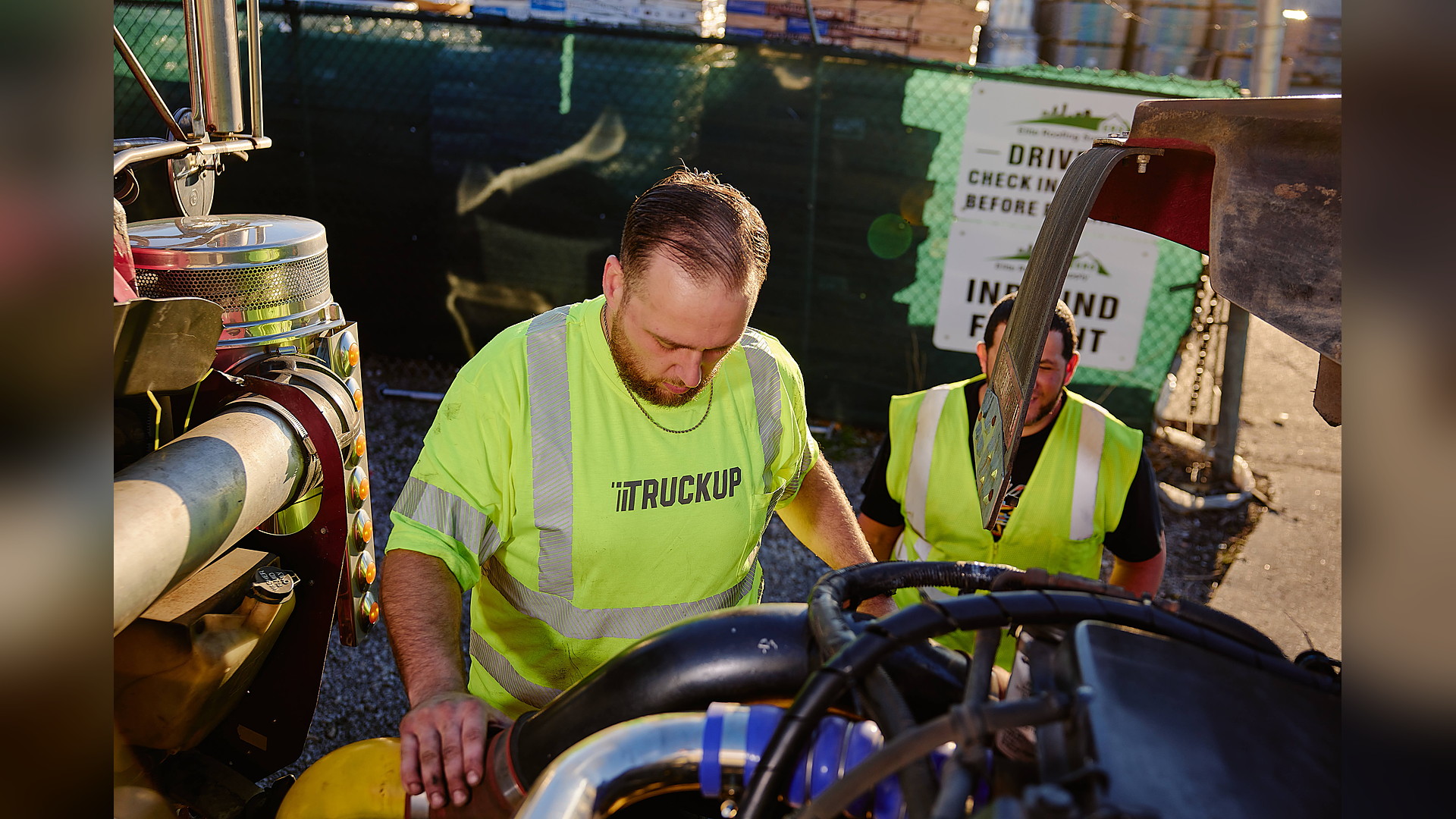
Charles “Chaz” Bryant, a fleet manager with Sunrise Moving & Packing, operates trucks across five U.S. cities. They were investing in used trucks when one became a money pit.
They spent nearly $40,000 across different vendors and shops, and it still wasn’t running right. That is, until Tracey, a tech with Truckup, diagnosed and fixed the problem within a few hours.
“It took [one good mechanic] three hours to fix a problem that we've spent 40 grand in different vendors or shops to try to get that truck fixed,” Chaz says in his own words.
The most expensive part of the repair was never the hourly rate. It was everything around it.
Mobile diesel labor runs higher per hour, a median of about $149 per-hour in-shop, with mobile work carrying roughly a 10 percent premium, putting a representative mobile rate near 160 dollars per hour. (Fullbay).
Cost-per-hour is the wrong frame to look at. Cost-per-repair gives a much fuller picture.
When you add up the cost of towing and the days you’re losing money because your truck can’t do hauls, mobile repair costs much less than any technician can repair on-site.
Key Findings: Mobile repair costs more per hour, less per breakdown
- Mobile labor carries roughly a 7-10 percent hourly premium (Fullbay 2026)
- A shop visit adds a tow ($500-1,500 typical for a short heavy-duty tow) and multiple days down; Mack Trucks executives put the industry average at four days for repairs averaging 3.5 hours of wrench time
- On a representative brake job, the shop path totals roughly $3,100 against roughly $1,800 mobile at conservative spot rates
- Mobile wins only on repairs it can finish on site; engine and transmission work still goes to a shop
How Much Higher Are Mobile Repair Rates Per Hour?
Fleet managers shopping around run $125-200 per-hour, not including minimum fees and after-hours premiums.
Shops can charge premium rates for two reasons:
- A mobile service truck brings the bay to you, and bills for equipment, drive time, and any self-contained work done on-site.
- The lower per-hour rate for shops does not include the tow there or the days the truck sits idle.
In a typical Truckup service call, a driver can expect a call-out fee of $115 plus $140 per-hour for labor with a two-hour minimum, adding up to $395 for the first two hours. More per-hour than you’d get at a shop, but much less than you’d see by the time the job is done.
“I expected, like, $1,500 for a pump, right? No, it was like $800,” says Dean Johnson, a part-time driver for XX Express about a Truckup repair he called for.
Is Mobile Repair Cheaper Once You Add Towing, Downtime, and Lost Loads?
For any repair a technician can finish on-site, the answer is yes.
The shop path spends money before the tech takes out the wrench. A routine heavy-duty tow runs $150-500 for hookup plus $5-10 a mile, based on typical heavy-duty towing quotes. Then, the truck waits.
"Sitting there probably three days before they actually get into the shop... your turnaround time can anywhere from seven to 10 days," says Kea Wanamaker, a fleet manager for WillScot Mobile Mini Holdings.
The waiting is the expensive part. The average tractor runs roughly 295 miles per operating day (ATRI). In August 2025 spot van rates of $1.61 a mile (DAT), every day down costs about $475 in hauling revenue.
"Most people think repair time equals wrench time,” says Jimmy Berg, owner of Trailer Boss. “It doesn't. A good shop might only need four real hours on your truck. But if they can't get to it until day three, and the part ships in two more, you're already at day five before a wrench touches it."
Here is one brake job, four hours of wrench time, run both ways.
Shop path:
- Tow, 30 miles: about $510
- Labor, 4 hours at the $149 shop median (Fullbay): $596
- Parts, $450 plus a 25 percent markup: about $563
- Three days down: about $1,425
- Total: about $3,100
Mobile path:
- No tow
- Labor plus call-out, 4 hours at $160: about $790
- Parts: about $563
- One day down: about $475
- Total: about $1,830
The adjustable number is the number of days the truck is down. Mack Trucks executives put the industry average at four days of downtime for repairs, averaging 3.5 hours of wrench time over three days (CCJ).
Paying Twice for the Same Problem
The highest cost in Chaz’s story doesn’t appear on any invoice. It’s the category of repairs you don’t see that cost you money and don’t fix the problem.
When nobody is held accountable for the diagnosis, every shop visit is billed as a success even when the issue is unresolved. When Tracy fixed Chaz’s truck, he diagnosed first, then applied the proper fix.
Chaz now chooses all his vendors with that one standard: flat-rate fee, no a la cart pricing, and detailed invoices uploaded straight into his fleet management software.
Where Shop Repair Still Wins
Not every job can be done on the side of the road. Major repairs, engine rebuilds, transmission pulls, and heavy diagnostics need heavier equipment and are best done in a shop.
Fleets of 5-25 trucks handle only 48.2 percent of maintenance in-house, so outsourced repair is where most small fleets already live (ATRI).
"If the truck can be made road-legal where it sits, mobile repair usually wins,” says Tom Pinder, founder of carrier-vetting firm VettedHaul. “If the job needs a lift, a bay, or parts that are not on the truck, it goes to a shop."
The question isn’t whether you should stick with a mobile repair or an in-house shop forever. It’s which path, depending on the repair event.
.jpg)
.avif)