
Neither mobile repair nor the shop wins this comparison outright. The split that matters is by repair type: mobile service covers the common failures that stop trucks (batteries, brakes, electrical faults, air leaks, coolant and hydraulic lines, tires), while teardown work (engine overhauls, transmission pulls, frame damage) belongs in a bay. The uptime question is narrower: for the repair in front of you, which option returns the truck to work at the lower total cost?
The hourly rate is where that math misleads. Mobile service bills more per hour than most shops, and stopping the comparison there makes the shop look cheaper. The total cost of a shop visit includes the tow, the days in the repair queue, and the revenue the truck does not earn while it waits.
The comparison below covers three things: what a mobile technician can actually fix, what the full cost picture looks like, and how fleet managers make the call.
Key Findings
- The decision comes down to scope, total cost, and time, not the hourly rate.
- Most common repairs can be completed where the truck sits: company operations data shows about 95% of mobile jobs finished on-site without a tow or shop visit.
- Shop labor runs a median $149 per hour against roughly $160 for mobile service (Fullbay). The difference rarely survives the tow bill.
- A routine breakdown tow typically runs $200-500 before any repair work begins.
- Operators interviewed for this series report shop turnarounds of 7-10 days for repairs with a few hours of actual wrench time.
- Engine overhauls, transmission work, frame damage, and warranty teardowns still belong in a shop. The strongest fleets use both.
What Types of Repairs Can a Mobile Mechanic Handle, and What Has to Go to a Shop?
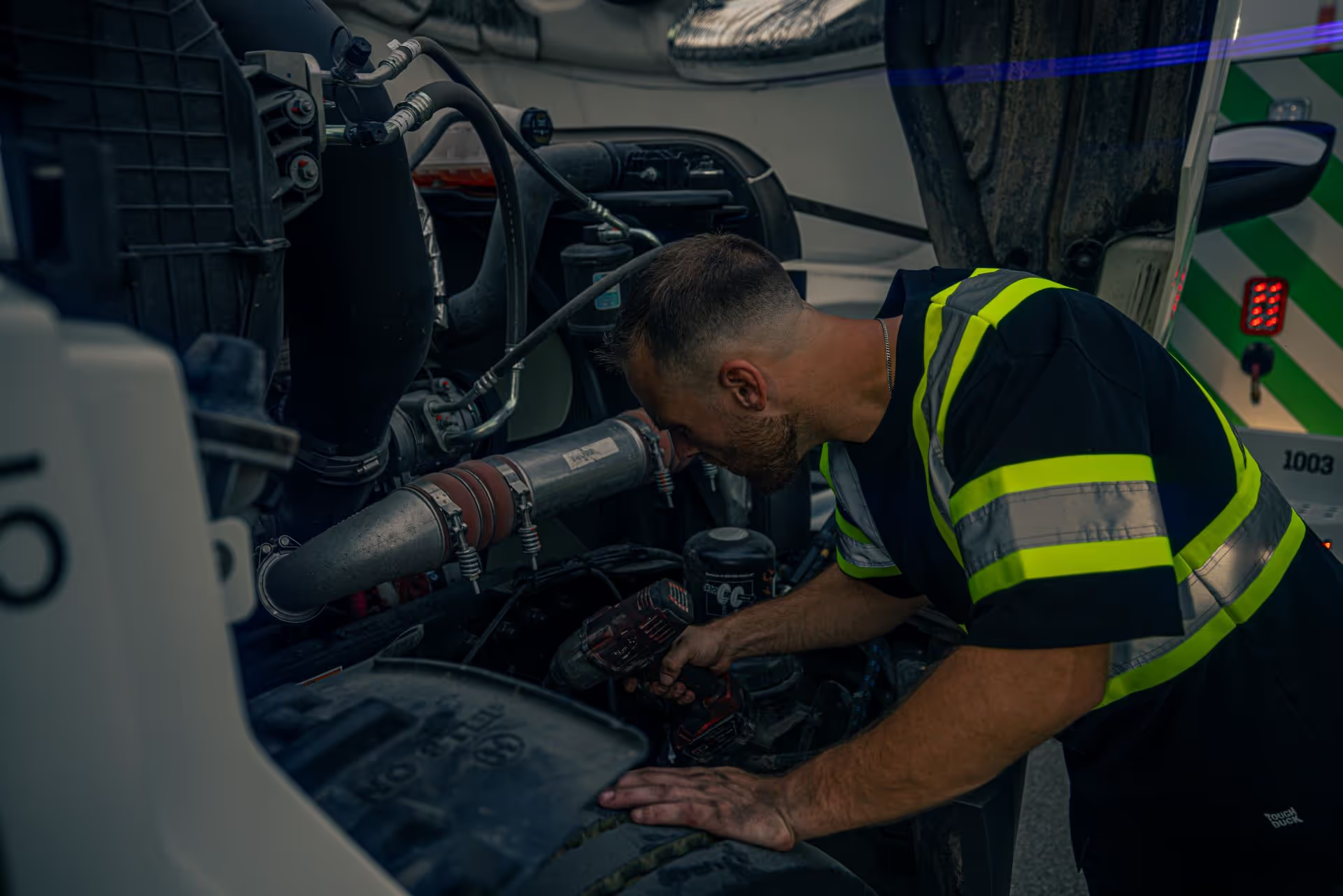
Mobile scope covers the failures that account for most roadside events: dead batteries, brake repairs and inspections, electrical and sensor faults, coolant and hydraulic lines, air system leaks, and tires. It also covers scheduled work that does not need a bay, including PM services and DOT-level inspections done at the fleet's own yard.
Shop scope is teardown work: engine rebuilds, transmission pulls, frame and structural damage, and any job that requires a lift, a controlled environment, or days of labor. No competent mobile operation claims this work, and the ones worth hiring say so before the customer asks.
The referral is the tell. When a tire on Dick Feddersen's truck could not be patched roadside, the responding technician did not improvise a fix that would not hold. He pointed Feddersen to a shop that could do the job, and the repair got done right the first time.
The scope question to ask any mobile provider is specific: what do your trucks carry, what do you complete on-site, and what do you hand off?
That range is why roughly 95% of mobile jobs close on-site, and why techs who run 100% mobile fix trucks where they sit instead of referring them back to a bay.
Is Mobile Repair Actually Cheaper Once You Factor In Towing, Downtime, and Lost Loads?
On paper, the shop wins the rate card. Median heavy-duty shop labor runs $149 per hour, while mobile service bills around $160 (Fullbay). On a two-hour repair, that premium is $22. The tow the mobile call avoids typically costs $200-500 by itself, before the truck has waited a single day for a bay.
The queue is where the real money goes. Operators interviewed for this series report 7-10 day shop turnarounds for repairs that involve a few hours of wrench time, and the fleet managers among them put daily downtime at $1,000-9,000 per truck depending on the equipment and the freight. Against numbers like those, the hourly rate difference is a rounding error.
The queue itself is structural, not neglect. Diesel technician training output covers about 44% of the industry's 26,500 annual openings (TechForce Foundation), and understaffed shops ration bay time. A shop prioritizes its bays; a fleet prioritizes its schedule. Those two orders rarely match.
Susan Still, a fleet manager at Hansen & Adkins Auto Transport who coordinates repairs across several states, describes shop quality in the same terms as shop timing: "50/50, some know what they're doing, some waste your time and money."
None of this makes the shop the wrong answer for shop-scale work. It makes the hourly rate the wrong basis for the decision. The comparison that holds up is total cost per repair: labor plus tow plus days down, which is the math resilient fleet operations are built on.
How Fleet Managers Decide Between Mobile Repair and the Shop
The fleet managers interviewed for this series make the call on four factors, usually in under a minute:
- Time pressure. Is there a load on the truck and a delivery window at risk? Time-critical freight favors on-site repair.
- Repair complexity. Is the failure inside mobile scope, or is it teardown work? Complexity decides the destination more than distance does.
- Location. A truck at a customer dock, on a shoulder, or in a remote yard favors mobile response. A truck already near a trusted shop with an open bay changes the math.
- Parts. Common parts ride on the service truck. A specialty component on back-order favors scheduling the shop visit and planning around it.
Susan runs her operation on exactly this split: mobile service for most repairs, and a heavy diesel shop for engine rebuilds. The split is decided in advance, so nobody negotiates it at the roadside.
Scheduled work removes the choice entirely. PM done at the yard on the fleet's own calendar means fewer unscheduled events where the mobile-or-shop question has to be answered under pressure.
Using Both Without Losing Uptime
The fleets that protect uptime are not the ones that picked a side of this comparison. They decided in advance which repairs go where, wrote it into driver protocol, and made the call once per event instead of once per phone call.
The result reads plainly in the operations: minor electrical faults get fixed at the dock the same day, teardown work gets scheduled into a bay with parts waiting, and the tow bill gets paid only when the tow buys something a technician on-site cannot deliver.

.avif)

