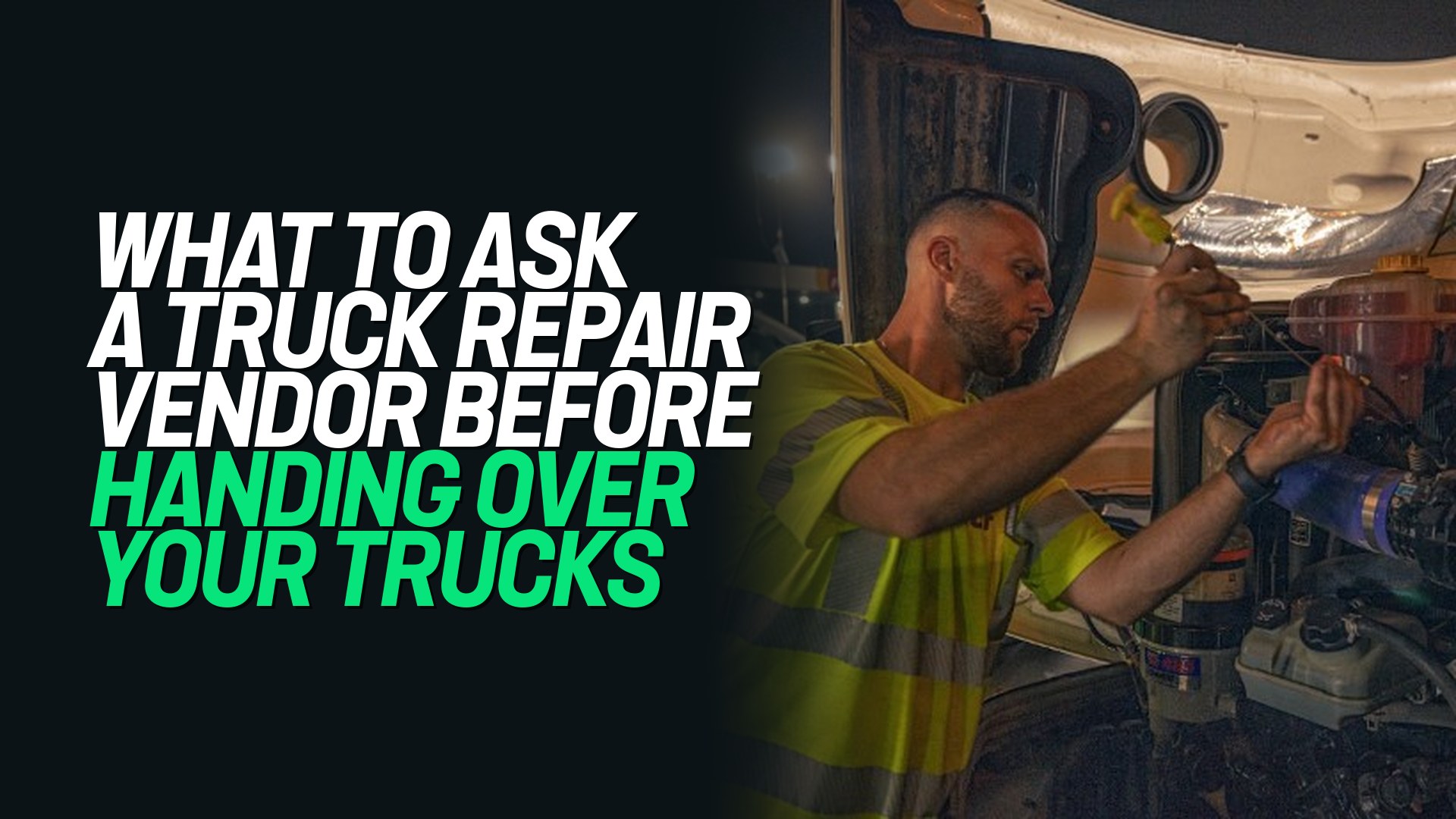
Martin still remembers the call. One of his drivers was stuck on the side of the road, with engine trouble, a delivery behind schedule, and no clear idea of how long the repair would take. By the time the truck was towed, diagnosed, and fixed, the damage was already done: lost time, lost revenue, and a frustrated customer waiting on the other end.
Back then, this was normal. As a fleet manager overseeing semi-trucks, Martin had come to accept that breakdowns were part of the job. When something failed, you get it fixed to keep the truck rolling. And even as telematics improved, giving fleets better visibility into fault codes and vehicle health, the outcome didn’t change as much as expected.
They could see problems earlier, but they still couldn’t fix them fast enough. That’s where the real gap became clear.
Downtime wasn’t just about unexpected failures. It was about what happened after the alert, the delays in diagnosis, the wait for available technicians, and the time lost coordinating repairs.
Today, leading fleets are solving that problem in different ways. They are not just using real-time diagnostics to detect issues; they’re pairing them with faster, more flexible repair response teams. And in doing so, many are cutting downtime by as much as 30%.
In this article, we’ll break down why real-time diagnostics alone aren’t enough, and what high-performing fleets are doing instead to turn early insights into real uptime gains.
The Real Problem: Why Downtime Still Exists in a Data-Rich Fleet World
Even with modern and advanced telematics and real-time diagnostics, many fleets are still experiencing costly downtime.
On paper, the problem should be largely solved as today’s systems can detect engine faults, monitor performance in real time, and flag early warning signs before a breakdown occurs. This has enabled fleets to have more visibility into vehicle health than ever before.
However, with increased visibility and real-time data on vehicle performance, breakdowns and delays remain persistent operational challenges.
The issue isn’t access to information; it’s the response that follows it. Alerts often arrive instantly, but action does not. Between the diagnostic insight and the actual repair, fleets encounter familiar bottlenecks: limited technician availability, workshop scheduling delays, and coordination gaps among drivers, dispatch teams, and service providers.
As a result, fleets end up in a reactive loop, just earlier in the process. They are no longer surprised by failures, but they still do not meaningfully prevent downtime. This reveals a critical gap in modern fleet operations: visibility has improved dramatically, but execution speed has not kept up.
And that gap is where most downtime still lives.
The Illusion of Visibility: When Real-Time Data Doesn’t Translate Into Real Action
Real-time diagnostics have changed how fleets understand their vehicles, but not always how they respond to them.
At first glance, it feels like control has improved. Fleet managers are happy since they can now see fault codes as they happen, monitor engine performance in real time, and receive alerts long before a breakdown occurs. Compared to the past, this level of visibility is a major step forward.
But visibility creates a subtle illusion: the belief that seeing a problem early automatically means it will be resolved early. In reality, the moment an alert appears is not the moment action begins. It is simply the start of a second process, one that depends on entirely different constraints.
A fault code might be instant. But the response still depends on:
- Whether a technician is available and the choice of the heavy-duty mechanic you choose
- How quickly can a repair be scheduled after the alerts
- Where the truck is located
- How fast can parts be sourced
This is where the gap widens.
While data moves in real time, fleet operations still move in steps. And those steps introduce a delay at every stage between detection and resolution.
The result is a disconnect: fleets gain awareness faster than ever, yet still operate within systems not built for immediate action. And that’s where downtime continues to slip through.
Where Fleets Lose Time: The Hidden Gap Between Detection and Repair
This is where most fleets quietly lose control of their uptime. Once a fault is detected, it’s easy to assume the problem is already being handled. The alert has arrived, the issue is visible, and the system has done its job. But in reality, this is where downtime begins to compound.
Because detection does not equal repair. What follows after an alert is not a single step but a chain of operational friction that slows everything down, even in highly digitized fleets.
- Alerts still require interpretation before action: Not every fault code signals immediate failure. Some are minor, others are urgent, and many sit in between. Because of this, fleets often pause to validate severity before taking action. That caution is necessary, but it already introduces a delay between detection and response.
- Repair decisions remain manual and time-sensitive: Even with real-time data, someone still has to decide what happens next. Should the truck continue, be rerouted, or pulled out of service? These decisions are often made under pressure, with incomplete context, slowing the shift from insight to execution.
- Technician coordination creates the first major bottleneck: Once an action is decided, you still need to find a reliable heavy-duty mechanic who is also available to fix the issue. This often means calling multiple vendors, checking availability, and waiting for confirmation. Even after a technician is identified, scheduling and dispatch coordination add another layer of delay.
- Repair execution is constrained by location and logistics: Trucks rarely break down in convenient places. They are often far from depots, workshops, or available service hubs. That means even when help is confirmed, travel time and logistical alignment become unavoidable sources of delay.
- Parts and readiness are not aligned with real-time alerts: While diagnostics happen instantly, the repair ecosystem does not. Parts still need to be identified and sourced, tools prepared, and service plans organized after the fact. This creates a mismatch between knowing the problem and being ready to fix it.
- Coordination among stakeholders further slows everything: drivers, dispatch teams, maintenance planners, and external service providers often operate in separate systems. This leads to miscommunication, repeated follow-ups, and limited visibility into repair progress, adding friction at every handoff.
What emerges is not a single inefficiency, but a compounding execution gap between detection and repair. Even when fleets have real-time diagnostics in place, they still lose time to vendor calls, scheduling delays, technician shortages, communication breakdowns, and a lack of live repair tracking.
And this is the real bottleneck: not the absence of information, but the inability to convert that information into immediate action. Until this gap is closed, downtime doesn’t disappear; it simply starts earlier in the process.
Why Does the Gap Exist in Most Fleet Operations?
The delay between detection and repair isn’t caused by a single issue; it’s the result of how fleet operations are structured. Even with real-time diagnostics, response systems remain fragmented, manual, and dependent on coordination among multiple moving parts.
- Alerts require interpretation before action: Not every fault code signals immediate danger. Some are minor, others are critical, and many fall somewhere in between. Because of this, fleets often pause after an alert to assess severity, validate the issue, and avoid unnecessary downtime. While this caution is important, it also introduces the first layer of delay between detection and response.
- Repair decisions are not automated: Even when data is available, the decision to act is still human-led. Fleet managers must determine whether a truck should continue operating, be rerouted, or be taken out of service. This decision-making step, especially under time pressure or an incomplete context, slows down the transition from insight to action.
- Technician availability is limited and fragmented: Identifying the problem is only one part of the process. The next challenge is finding a qualified technician who is both available and appropriately located. In many cases, fleets rely on dispersed service networks or independent workshops, making it difficult to guarantee immediate response.
- Location constraints slow everything down: Breakdowns rarely happen in convenient locations. Trucks may be on long-haul routes, in remote areas, or far from established service hubs. Even when a technician is available, reaching the vehicle introduces travel time, coordination effort, and additional operational delay.
- Parts and repair readiness are not synchronized with diagnostics: Real-time systems can detect issues instantly, but repair ecosystems are often not connected to that same speed. Parts still need to be identified, sourced, and delivered, and tools or service plans may need to be arranged afterward. This mismatch creates a lag between knowing what’s wrong and being ready to fix it.
- Multiple stakeholders create coordination friction: Fleet operations typically involve several independent actors, from drivers and dispatch teams to maintenance planners and external service providers. When these groups operate in separate systems or communication channels, every handoff introduces delay, misalignment, or duplication of effort.
Together, these factors explain why even highly digitized fleets still experience downtime. The issue is no longer visibility; it’s the speed of coordination across the entire repair ecosystem.
The Real Shift: Why High-Performing Fleets Win on Execution Speed, Not Diagnostics
Once fleets gain access to real-time diagnostics, the competitive advantage no longer comes from simply seeing what is happening inside the vehicle. Visibility becomes a baseline capability, something every modern fleet is expected to have. The real differentiator emerges after the alert appears.
At that point, the question is no longer “Can we detect problems early?” but “How quickly can we act on what we now know?”
This is where many fleets still struggle. Even with advanced telematics systems in place, the response to an alert often follows a slow, layered process: interpretation, escalation, decision-making, coordination, and, finally, repair. Each step introduces delay, and together they form the hidden cost behind most downtime events.
High-performing fleets operate differently because they recognize a key reality: early detection only creates value when it leads to immediate execution.
They don’t treat diagnostics as the end of insight; they treat it as the trigger for action. And that shift is clear in how they operate on the ground.
1. Alerts are Treated as Immediate Action Triggers, Not Passive Notifications
In many fleet operations, alerts from real-time diagnostics are still treated as informational updates rather than operational instructions. Fault codes arrive in dashboards, emails, or systems, but then enter a review queue where they wait for interpretation, validation, and prioritization before any action is taken.
High-performing fleets remove much of this delay by changing how alerts are classified from the start.
Instead of applying the same manual review cycle to every fault code, they define response rules in advance based on severity, risk level, and operational impact. This means certain alerts are no longer “review items”; they are pre-approved triggers for action.
For example, a critical engine fault or brake system warning doesn’t wait for layered approval or internal discussion. It immediately initiates a predefined response pathway, which may include dispatching a technician, rerouting the vehicle, or initiating a controlled stop procedure.
This approach significantly reduces hesitation in the most time-sensitive moments. It also eliminates the small but costly delays that occur when teams pause to interpret whether an alert is “serious enough” to act on immediately.
The key shift here is structural: fleets move from reacting to alerts as isolated data points to treating them as operational signals that automatically activate response systems.
And by removing the gap between detection and decision-making, they take the first major step toward reducing downtime at its source.
2. Decision-Making is Structured, Not Reactive
In most fleet environments, even when real-time data is available, decisions are still made reactively. An alert comes in, but what happens next depends on interpretation, context gathering, and internal discussion before any action is taken.
High-performing fleets reduce this uncertainty by structuring decision-making in advance.
Instead of evaluating each situation from scratch, they build predefined response logic based on variables such as fault severity, operational risk, vehicle type, and route criticality. This allows decisions to be made faster and more consistently, without requiring extended back-and-forth validation each time an issue arises.
For example, a minor engine warning may trigger continued monitoring, while a critical brake or powertrain fault automatically initiates a stop-and-repair workflow. These decisions are not made on the fly; they are already mapped into the system. This shift matters because decision-making is often one of the most underestimated sources of downtime. Even when detection is instantaneous, fleets lose valuable time debating the right response.
By removing that ambiguity, high-performing fleets eliminate one of the biggest friction points between awareness and action. The result is a more predictable, faster response cycle where operational decisions no longer slow down the repair process. And once decision-making is structured, the entire system moves closer to real-time execution instead of delayed reaction.
3. Diagnostics are Directly Linked to Repair Workflows
In many fleets, real-time diagnostics exist as a separate layer from maintenance operations. The system can detect issues instantly, but that information still has to be manually transferred into action, often through phone calls, emails, or separate maintenance platforms.
High-performing fleets remove this disconnect by directly linking diagnostics to repair workflows.
Instead of treating a fault alert as a standalone notification, it becomes the starting point of a connected response chain. Once an issue is identified, it immediately feeds into the maintenance process, triggering task creation, technician assignment, and repair coordination without waiting for manual handover.
This integration is critical because it eliminates one of the most common sources of delay: translation loss between systems. In traditional setups, valuable time is lost simply moving information from the diagnostic tool to the people responsible for fixing the issue.
By contrast, when diagnostics and repair workflows are connected, that handoff disappears. The alert doesn’t just inform, it initiates action within the same system flow.
For example, a critical fault doesn’t sit in a dashboard waiting for review. It automatically generates a repair request, matches it to available support based on location and capability, and moves it into an active service queue. This shift transforms diagnostics from a monitoring function into an operational trigger.
And more importantly, it ensures that once a problem is detected, the system is already moving toward resolution, without waiting for separate coordination steps to catch up.
4. Technician Access is Prioritized by Speed and Proximity
Even when diagnostics are accurate and repair workflows are connected, downtime is still heavily influenced by one unavoidable factor: how quickly a qualified technician can physically reach the vehicle.
In many traditional fleet setups, technician assignment is based on availability within fixed workshops or established vendor networks. While this works under normal conditions, it becomes a major limitation when response speed is critical. High-performing fleets shift the focus from “who is available” to “who can respond fastest and arrive fully equipped.”
Instead of relying solely on depot-based servicing or delayed workshop scheduling, they increasingly leverage mobile repair mechanics, technicians who operate from fully equipped service vans carrying the tools, diagnostic equipment, and essential parts needed to perform on-site repairs.
This changes the dynamics of response entirely. Rather than moving the truck to the repair facility, the repair capability is moved directly to the truck.
These mobile units are deployed based on real-time proximity, skill match, and availability, reducing the time lost in towing, scheduling, and workshop queues. In many cases, they can begin diagnostics and repairs immediately upon arrival, without requiring additional support infrastructure. This shift is important because it acknowledges a simple reality: the fastest diagnosis is still limited by the slowest physical response.
Even when an issue is clearly identified, downtime continues to accumulate if the technician is far away or dependent on a fixed service location. Mobile repair capability removes much of this friction by compressing the distance between detection and execution. By bringing fully equipped technicians directly to the breakdown point, fleets eliminate one of the biggest delays in the repair process, the transportation of the vehicle itself.
Moreover, when responses become mobile, flexible, and proximity-driven, downtime ceases to be a logistics problem and becomes a speed problem.
5. Coordination is Compressed into a Single Flow, Not Multiple Handoffs
Even when fleets have strong diagnostics, structured decision-making, and access to mobile repair support, one of the most persistent sources of downtime remains hidden in plain sight: coordination friction.
In traditional fleet operations, repair execution moves through multiple disconnected stages. An alert is generated, a decision is made, a technician is contacted, availability is confirmed, a schedule is arranged, and only then does repair begin. Each of these steps may seem minor on its own, but together they create a fragmented workflow that wastes time at every handoff.
High-performing fleets eliminate much of this fragmentation by compressing coordination into a single, continuous flow.
Instead of separate communication channels between drivers, dispatch teams, technicians, and service providers, information flows through integrated systems that synchronize updates, assignments, and status changes in real time.
This reduces the need for repeated follow-ups, manual confirmations, and back-and-forth communication that typically slow down response times. Everyone involved in the repair process operates from the same live information, which minimizes miscommunication and eliminates unnecessary delays between stages.
The key shift here is structural: coordination is no longer treated as a sequence of individual tasks; it becomes a unified response process. When a fault is detected, the system doesn’t restart communication at each stage. It automatically carries context forward, ensuring every stakeholder is aligned from detection to repair.
This compression of coordination is what ultimately removes the final layer of friction between insight and execution. And once that layer is removed, fleets are no longer slowed by process gaps; they operate as a continuous response system, with detection flows directly into resolution.
What This Shift Means for Fleet Downtime (And Why It Adds Up to 30%)
When you step back and look at how high-performing fleets operate, the impact is not driven by a single improvement. It comes from a series of small execution gains that compound across the entire response process.
Real-time diagnostics alone don’t reduce downtime. What reduces downtime is what happens after the alert, how quickly decisions are made, how fast support is deployed, and how seamlessly repair execution begins.
When fleets optimize all these stages together, the results are significant.
- Alerts are no longer delayed by interpretation cycles
- Decisions are made faster through predefined response logic
- Diagnostics are directly tied to repair workflows
- Mobile technicians reduce physical response delays
- Coordination is streamlined into a single flow
Individually, each improvement might only save minutes. But across an entire fleet, those minutes add up to hours, and hours to measurable operational gains.
This is why high-performing fleets are consistently reporting up to 30% reductions in downtime. Not because they eliminated breakdowns entirely, but because they removed the friction between breakdown and recovery.
The real transformation is not in preventing every failure. It is in reducing the time it takes to recover from them. Once your fleets reach that level of execution speed, uptime stops being a reactive metric and becomes a controlled operational outcome.
Final Takeaway: Uptime Is No Longer About Seeing Problems, It’s About Resolving Them Faster
The evolution of fleet maintenance has not been about gaining more data. Most fleets today already have access to real-time diagnostics, fault codes, and detailed vehicle insights. Yet downtime still persists.
What separates high-performing fleets from the rest is not what they can see, but how quickly they can act on it.
When execution speed becomes the priority, everything changes. Alerts trigger action instead of analysis. Decisions follow a structured logic rather than hesitation. Diagnostics connect directly to repair workflows. Mobile technicians reduce physical delays and coordination becomes a continuous, connected flow instead of a series of disconnected steps.
Each improvement may seem incremental on its own, but together they reshape how fleets recover from disruption.
And that is the real shift.
Downtime is no longer defined by how often issues occur. It is defined by how long it takes to respond, coordinate, and resolve them. Fleets that understand this are no longer competing on visibility alone. They are competing on execution speed, and, in doing so, fundamentally changing what uptime means in modern fleet operations.
Because in the end, the advantage doesn’t belong to the fleet that detects problems first. It belongs to the fleet that fixes them fastest.