
In an industry where every minute counts, relying solely on a central workshop can leave fleet operations vulnerable. A single breakdown can cause delays across routes, frustrate drivers, and increase operational costs. This is a reality Martin, a fleet manager overseeing regional and long-haul operations across Kansas, has faced firsthand. As we approach 2026, fleet managers and truck owners like Martin need a more effective strategy to keep their trucks moving and their drivers confident on the road.
Decentralized maintenance is emerging as a key strategy for enhancing fleet resilience. By distributing service capabilities through mobile repair units, satellite workshops, and strategically located maintenance teams, fleets can respond quickly to issues, reduce downtime, and maintain operational continuity. For Martin’s Kansas-based fleet, where routes often stretch across rural highways and weather-exposed corridors, this method has proven especially valuable. This approach not only speeds up the response to mechanical failures but also minimizes disruptions caused by weather, remote routes, and heavy workloads.
Additionally, integrating predictive and preventive maintenance into a decentralized model ensures that potential issues are detected early. Routine servicing keeps trucks reliable, while mobile support addresses unexpected problems as they arise. For drivers like Calvin, who regularly haul freight through long interstate routes and secondary roads, this means fewer roadside breakdowns and more confidence knowing support is never too far away. The outcome is a more efficient fleet that is safer for drivers and better equipped to handle the demands of 2026.
Decentralized Maintenance: What It Is and Why It Matters for Your Fleet
What happens when a truck breaks down hundreds of kilometers away from your central workshop? Calvin knows this scenario all too well. The result is often delays, frustrated drivers, missed deliveries, and increased costs, especially when support is hours away. Decentralized maintenance, a strategy where repair and maintenance activities are distributed across various locations from a centralized shop, addresses this issue by distributing your fleet's repair and servicing capabilities across multiple locations.
This approach can involve mobile repair units, satellite garages, and strategically situated maintenance teams along key routes. For fleet managers and truck owners like Martin, who manages multiple routes across Kansas, decentralized maintenance helps reduce operational bottlenecks. A truck stranded in a remote area doesn’t have to wait hours for central support; nearby maintenance teams or mobile units can respond quickly, keeping drivers like Calvin safe and minimizing downtime.
In addition to faster response times, decentralized truck repair and maintenance enhances the overall resilience of the fleet. It ensures that trucks remain operational even during peak workloads, unexpected breakdowns, or challenging routes. Local teams and mobile units also facilitate predictive and preventive maintenance programs, ensuring that inspections and repairs occur efficiently, regardless of the location of your heavy-duty truck, whether it’s operating near a major Kansas hub or on a remote delivery route.
Here are several reasons why adopting a decentralized maintenance approach is crucial for modern fleets:
- Faster response times: When trucks encounter mechanical issues, they can be promptly serviced on-site or at nearby facilities, eliminating the delays associated with transporting them to a central workshop. This proactive approach not only significantly reduces downtime but also ensures that operations can resume swiftly, minimizing disruptions to logistics and overall productivity of your organization. For Martin, this means fewer stalled trucks across Kansas routes and more predictable delivery timelines. By addressing breakdowns quickly, fleet managers can maintain schedules more effectively and improve the reliability of their transportation services.
- Enhanced driver safety: When an emergency breakdown occurs, mobile truck repair mechanics can easily be deployed to minimize the driver’s exposure to hazardous road conditions, particularly when trucks experience mechanical failures or unexpected stalls. For drivers like Calvin, this reduces time spent vulnerable on highways or isolated roads. By providing prompt and accessible assistance, these units ensure that drivers can receive help quickly, thereby reducing the time they spend in risky roadside situations.
- Reduced operational glitches: By distributing truck repair and maintenance servicing capabilities across a wide geographical area, peak workloads don’t overwhelm a single maintenance hub, which can result in delays and service rescheduling. For fleets operating across Kansas and neighboring regions, this allows maintenance demand to be absorbed more evenly. By leveraging a network of maintenance facilities, organizations can better manage demand fluctuations, maintain consistent service levels, and enhance overall efficiency.
- Improved fleet resilience: With semi-truck repair and maintenance services available nationwide, as a fleet manager, truck owner, or semi-trailer operator, you can rely on quick fixes in case of unforeseen circumstances, such as challenging weather or rugged terrain. This decentralized approach enables fleets like Martin’s to identify and address issues promptly, minimizing downtime and ensuring that vehicles remain operational even under challenging conditions.
- Seamless integration with predictive and preventive maintenance: Localized teams and mobile mechanics ensure repairs and routine checks happen efficiently wherever trucks operate. This proactive maintenance approach minimizes downtime and enhances the reliability of your fleet, allowing you to address potential issues before they escalate, whether Calvin is en route on a long haul or completing regional deliveries.
- Cost savings: Low cost of operation is enhanced through quicker repair times and a reduction in long-distance towing expenses. By addressing minor truck issues promptly, fleets can minimize the risk of these issues escalating into more serious problems. For Martin, fewer emergency tows across Kansas translate directly into lower operational costs and better budget control.
- Better driver retention and satisfaction: Quick support and reduced downtime create a smoother experience for drivers, improving morale and loyalty. When drivers like Calvin receive timely assistance, they can stay productive, maintain schedules, and feel supported by their fleet management team. This positive experience fosters loyalty and long-term retention.
- Consistent delivery schedules: Reliable and consistent delivery schedules are essential for the success of any fleet operation. By minimizing transportation delays, fleets strengthen customer trust and reliability. For Martin’s fleet, this consistency has helped maintain strong client relationships and reinforce the fleet’s reputation as a dependable logistics partner.
By embracing decentralized maintenance, fleets can operate more reliably, reduce costly delays, and create a safer, more confident environment for drivers, both for managers like Martin, who make operational decisions, and drivers like Calvin, who face the realities of the road every day.
How Decentralized Fleet Maintenance Reduces Downtime, Risk, and Dependence on Central Workshops.
When fleet maintenance relies solely on a central workshop, even minor issues can lead to significant delays. Trucks that break down far from the base incur high towing costs, and drivers are left waiting as schedules fall apart.
Adopting a decentralized fleet maintenance model can effectively address these challenges by establishing service capabilities closer to the areas where trucks operate, such as along major routes, in high-risk zones, and even offering mobile repairs directly on the roadside.
This strategy not only reduces downtime but also minimizes operational risks and lessens the dependence on a single repair hub. Here’s how decentralized fleet maintenance brings these advantages to life:
Here’s how decentralized fleet maintenance achieves these benefits in practice:
- Cuts Downtime by Bringing Repairs Closer to Your Vehicles
Maintenance processes no longer rely on routing every issue back to a central workshop. With mobile repair units and regional partners tackling problems directly at the point of failure, we are effectively reducing downtime. This proactive approach ensures that trucks stay on the road longer, ultimately maximizing productivity and enhancing operational effectiveness.
- Enhances Efficiency in Fleet Maintenance
By decentralizing fleet maintenance, you can effectively distribute the workload across multiple remote repair heavy-duty technicians, thereby reducing the strain on individual facilities. This approach minimizes the impact of peak seasons, weather disruptions, and high breakdown periods, allowing for smoother operations and reducing potential backlogs. Your team will enjoy faster response times with quick repairs and routine maintenance that are managed more efficiently, ultimately keeping the fleet running smoothly.
- Reduces Reliance on Costly Towing Services
In many breakdown scenarios, having the ability to address mechanical issues directly at the site can significantly reduce the necessity for costly towing services. By implementing on-site repairs and having access to nearby service facilities, you can quickly tackle problems such as flat tires, dead batteries, or minor engine troubles. This proactive approach not only helps lower recovery costs but also minimizes the time vehicles spend off the road.
Swift resolution helps maintain the efficiency of transportation routes, ensuring that delays are minimized and services remain uninterrupted. In turn, this reduces the overall logistical impact on businesses and drivers alike, fostering a more reliable transportation system.
- Enhances Response Efficiency During Breakdowns
When your trucks experience breakdowns on their routes, those farther from the base can benefit from a system that utilizes localized repair resources. Strategically positioning repair personnel and equipment closer to operational routes can ensure that support arrives promptly and efficiently.
This swift response capability minimizes vehicle downtime, enabling faster repairs and a quicker return to service. As a result, your company upholds the integrity of delivery schedules and boosts overall operational efficiency, leading to improved customer satisfaction and more effective resource management. The proactive deployment of repair resources plays a crucial role in maintaining continuous service and minimizing costs associated with extended breakdowns.
- Enhancing Operational Resilience Across the Fleet
By adopting a decentralized maintenance approach, we can effectively minimize operational risks throughout the fleet. This strategy reduces the likelihood of encountering a single point of failure that can arise from relying on a central workshop.
With decentralized maintenance, fleets are better equipped to maintain continuous operations, as they can address challenges at multiple service points without disruption. This distributed model not only increases reliability but also ensures that fleet operations remain robust even when one service point is busy or temporarily unavailable.
- Improves Driver Safety and Confidence
Fast, reliable mobile truck repair support reduces drivers’ exposure to roadside hazards and long wait times during breakdowns. When drivers know help is nearby, stress levels drop, decision-making improves, and safety protocols are followed more consistently. This sense of backup builds trust in fleet operations, boosts morale, and strengthens driver retention. Drivers stay longer when they feel protected and supported on the road.
- Promotes Effective Predictive and Preventive Maintenance Strategies
With distributed truck repair service points, your fleet can address predictive alerts and routine maintenance needs without diverting trucks far from their routes. Instead of waiting for issues to worsen or scheduling long trips back to a central workshop, inspections, part replacements, and minor repairs can be handled closer to where trucks are already operating.
This will help you reduce route disruptions, keep every vehicle’s maintenance on schedule, and ensure preventive tasks are completed before problems escalate, improving reliability, uptime, and overall fleet performance.
- Creates More Predictable Fleet Operations
Enhancing fleet operations can significantly increase predictability and efficiency. By minimizing delays and speeding up repair processes, organizations can create a smoother workflow that reduces the need for emergency interventions. This proactive approach not only streamlines operations but also ensures that deliveries are made on time, fostering stronger relationships with customers.
As reliability improves, businesses can build greater trust, knowing that they can depend on consistent service and timely delivery. Ultimately, these improvements lead to a more effective fleet management strategy and heightened customer satisfaction.
How Predictive, Preventive, and Decentralized Fleet Maintenance Work Together to Protect Your Bottom Line
In the dynamic landscape of fleet management, predictive, preventive, and decentralized maintenance are three critical strategies that, when effectively integrated, form a comprehensive approach to ensuring operational efficiency and cost-effectiveness. Each strategy addresses distinct maintenance challenges; however, their combined implementation provides a robust framework that actively mitigates downtime, minimizes emergency repair expenses, and reduces the reliance on central workshops.
Predictive maintenance tells you what’s likely to fail and when. Using fleet maintenance technologies: telematics, diagnostics, and performance data, fleets can help you identify early warning signs and address issues before they escalate into roadside breakdowns or emergency repairs.
Preventive maintenance addresses the basics that keep trucks reliable on a day-to-day basis. Scheduled inspections, servicing, and part replacements reduce wear and tear, extend vehicle life, and create consistency across the fleet.
Decentralized maintenance ensures those insights and schedules can actually be acted on without long detours or towing. With mobile repair units and local service partners, repairs and inspections happen closer to where trucks operate.
These three strategies work best as a connected system. Each one strengthens the others, turning maintenance from a reactive burden into a controlled, cost-saving operation. Here’s how combining predictive, preventive, and decentralized fleet maintenance actually reduces downtime, costs, and operational risk.
- Predictive maintenance identifies problems early.
Telematics and diagnostics monitor trucks in real time, flagging abnormal wear, overheating, brake issues, or electrical faults before they trigger breakdowns. This allows fleets to act on their own terms, not during roadside emergencies. - Preventive maintenance turns insights into routine action.
Scheduled inspections, servicing, and part replacements address both predicted risks and everyday wear that data may miss, creating a consistent baseline of reliability across the fleet. - Decentralized fleet maintenance enables fast execution.
Mobile repair units and local service partners complete planned fixes closer to where trucks operate, eliminating the need for extended returns to central workshops and the delays caused by full service bays. - Faster interventions prevent breakdowns and towing costs.
Minor issues are handled on route, stopping small faults from escalating into immobilizing failures that require expensive recovery. - Reduced reliance on central workshops enables operations to continue smoothly.
Distributed servicing avoids bottlenecks during peak seasons, adverse weather conditions, or high-failure periods when centralized shops are overloaded. - Lower downtime improves asset utilization and revenue.
Trucks spend more time generating income and less time idle, waiting for repairs or transport, directly improving fleet efficiency and profitability. - Drivers stay safer, calmer, and more productive.
Faster support and fewer roadside incidents reduce stress, improve morale, and support long-term driver retention. - Maintenance becomes predictable instead of disruptive.
Costs stabilize, schedules become more reliable, and fleet managers gain better control over daily operations and long-term planning.
How You Can Adopt Decentralized Maintenance in Your Fleet Operations
If your goal is to keep trucks moving and downtime predictable, relying on a single central workshop is no longer enough. Decentralized maintenance is about bringing repair and service support closer to where your trucks actually operate, on highways, rural routes, and long-haul corridors. Here’s how to put it into practice without overcomplicating your operations.
- Map Your Fleet’s Breakdown Hotspots
Start by analyzing your routes and service history. Identify the locations where trucks are most likely to experience issues, such as remote highways, high-traffic corridors, harsh weather zones, or rough road networks. These insights help you decide where decentralized support will have the most significant impact. - Partner With Reliable Mobile and Remote Repair Providers
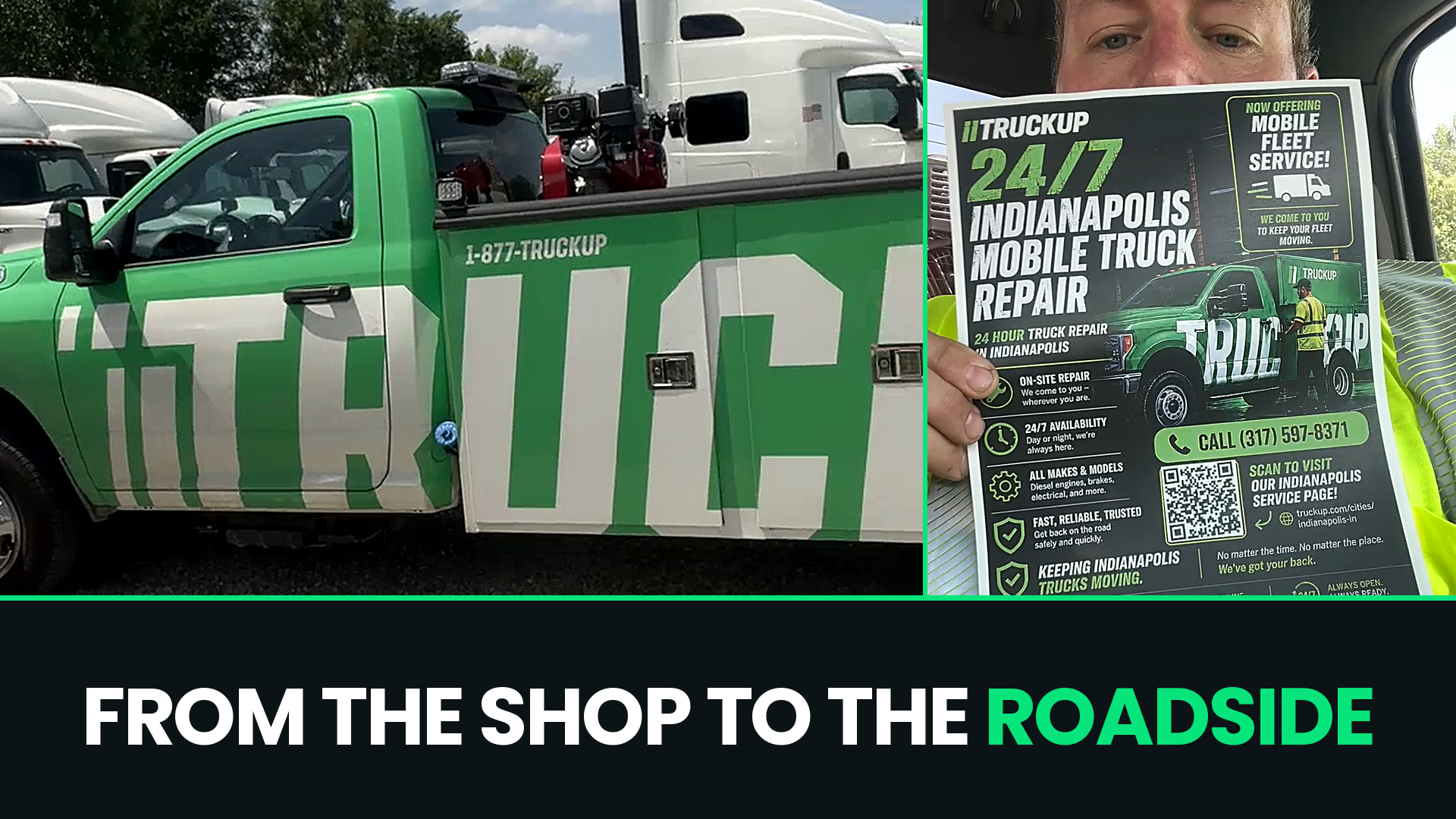
Decentralized maintenance works best when you have trusted support on standby. Partnering with mobile and remote truck repair providers, such as Truckup, allows you to extend your maintenance reach without building new workshops. With on-demand mobile repair and strategically located service partners, issues can be addressed, reducing wait times, towing costs, and driver frustration. - Integrate Predictive and Preventive Maintenance
Utilize telematics, diagnostics, and scheduled servicing to identify potential issues early. When predictive insights are combined with preventive routines, decentralized teams can act quickly, handling planned fixes locally instead of routing trucks back to a central shop. This keeps maintenance proactive rather than disruptive. - Enable Fast, Clear Driver Reporting
Your drivers are often the first to spot early warning signs. Make it easy for them to report issues immediately through clear communication channels. Faster reporting allows mobile repair teams to respond before minor problems escalate into roadside breakdowns. - Measure, Refine, and Scale
Track key metrics, including response times, downtime, repeat failures, and repair costs. Use this data to fine-tune where support is deployed, identify which routes require more coverage, and determine how partners like Truckup fit into your long-term maintenance strategy.
Decentralized maintenance isn’t about replacing your central workshop; it’s about reducing dependence on it. With the right partners, data, and processes in place, you create a flexible maintenance model that keeps trucks productive, drivers supported, and operations resilient wherever the road leads.
Conclusion: Building a Fleet Prepared for the Demands of 2026
As fleet operations grow increasingly complex, relying solely on a single central workshop is no longer enough to keep trucks operating smoothly, costs predictable, and drivers supported. Downtime is more costly, routes are more challenging, and customer expectations are higher than ever. For these reasons, decentralized fleet maintenance is becoming a necessity rather than just a luxury.
By positioning maintenance capabilities closer to where trucks operate and combining this approach with predictive insights and preventive routines, fleets can reduce risks, respond more quickly, and maintain control during unexpected situations. Breakdowns are managed more efficiently, minor issues are resolved before they escalate, and towing costs are minimized, thereby safeguarding profit margins.
Most importantly, this strategy transforms maintenance from a reactive burden into a strategic advantage. Fleets gain flexibility during peak seasons, resilience in extreme conditions, and the confidence that no single point of failure will halt operations.
In 2026 and beyond, the most successful fleets won’t necessarily have the largest workshops; they will be those with the smartest, most distributed maintenance strategies. Fleets that invest in decentralized maintenance today are building operations that are safer, more reliable, and much better equipped for whatever challenges the road may present in the future.

.avif)