
Fleet managers defer preventive maintenance for a reason that has nothing to do with not knowing better. They know the math. They defer anyway, because the way most fleets are structured rewards them for it, right up until a truck goes down and erases months of "savings" in a single tow.
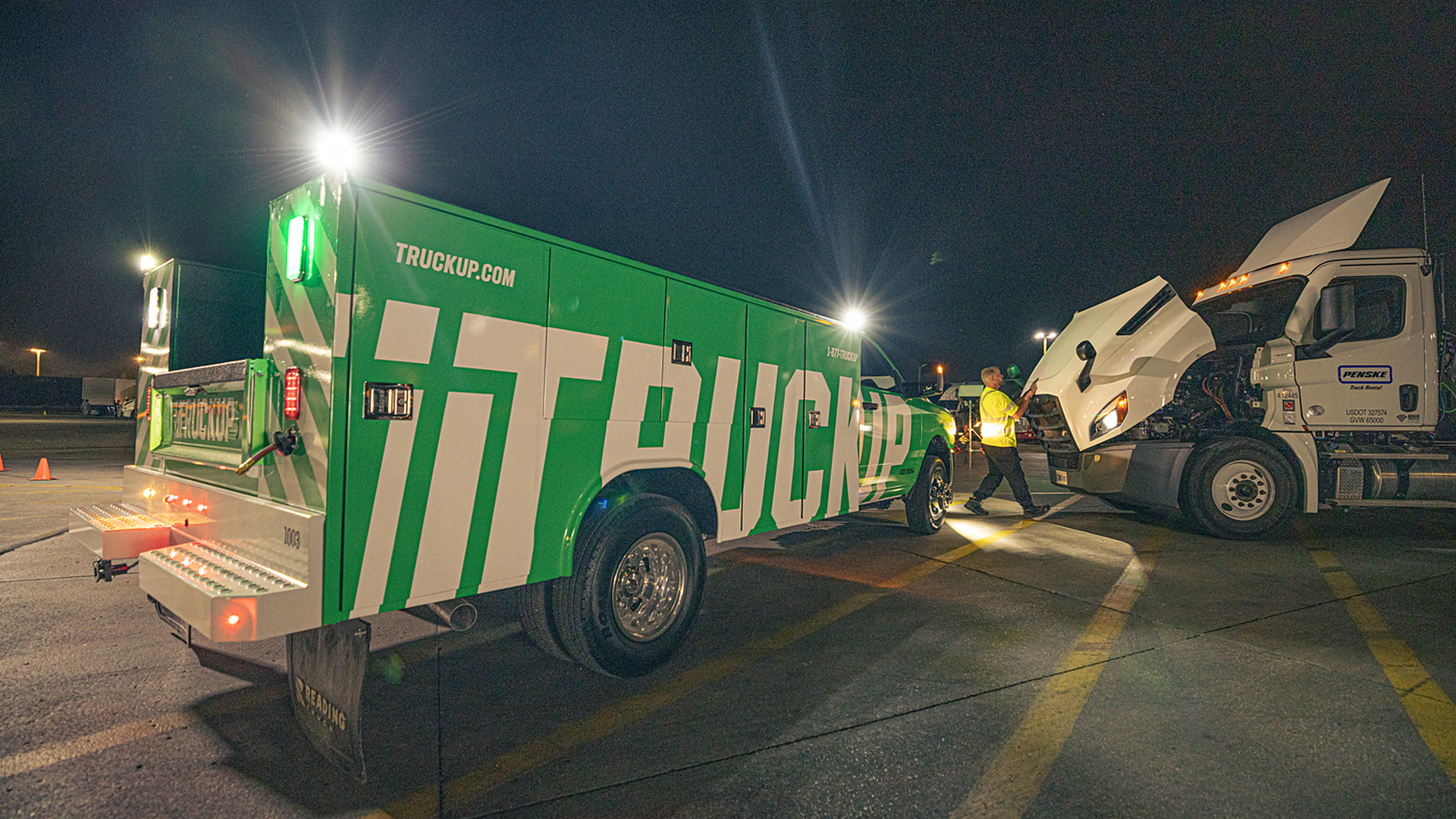
Charles "Chaz" Bryant, a fleet manager at Sunrise Moving & Packing, watched it happen on one truck. His company spent roughly $40,000 across multiple vendors and shops chasing a problem that never resolved. A Truckup technician fixed it in three hours.
"We probably spent $40,000 in maintenance repairs across different vendors and shops. It still didn't run right," Bryant said. "Tracy came out, cleared the codes, and the truck's been fine ever since. It took him three hours to fix a problem we'd been chasing for months."
That outcome wasn't bad luck or a bad vendor. It was the predictable result of an operation built to chase symptoms after the fact instead of catching them early, because the system rewards short-term cost avoidance over long-term planning.
Key Findings
- A preventive maintenance program saves an estimated 12 to 18 percent over a reactive one, according to the U.S. Department of Energy. On a cost-per-horsepower basis, the same research puts run-to-failure maintenance at roughly three times the cost of a proactive program.
- The barrier to fixing this is rarely cost or technology. It is organizational. Maintenance managers are measured on monthly spend rather than total cost of ownership.
- A workable pivot starts low. Entry-tier fleet-management software runs $4-10 per vehicle per month and covers PM scheduling, digital inspections, and work-order tracking.
- A hybrid model captures most of the benefit without the overhead of an in-house shop: mobile service for routine PMs at the yard during off-hours, shop visits reserved for major work.
Why the Math Doesn't Change the Behavior
Protracted breakdowns drain fleet revenue. That is not in dispute, and it is not new. Fleet managers discuss it constantly, and the cost research has been settled for years.
A preventive maintenance program saves 12 to 18 percent over a purely reactive one (U.S. Department of Energy). Facilities still relying on run-to-failure can often save well beyond that.
The same guide lays out the cost difference in concrete terms:
Run-to-failure maintenance runs about $18 per horsepower per year, a time-based preventive program about $13, and a fully proactive program built on root-cause analysis about $6. The reactive approach costs roughly three times the proactive one for the same equipment.
The reason is in what reactive maintenance hides. A failure that happens off-hours or near the end of a shift means overtime labor. A critical truck down means expedited parts at a premium. And one component failing often takes an adjacent one with it, turning a single repair into several.
So the question worth asking isn't whether preventive maintenance saves money. It does. The question is why fleets keep choosing the more expensive path when the numbers are this clear. The answer is in how the work is organized, not in what anyone does or doesn't know.
How the Incentives Are Set
A maintenance manager is typically measured on monthly spend, not on the annual cost of keeping a truck alive. Under that metric, money spent on a PM is a visible cost. A breakdown that hasn't happened yet is invisible. So deferring maintenance looks like savings on the monthly report, until the truck goes down and the number that lands is far larger than the PM ever would have been.
The manager who deferred isn't being reckless. He is responding rationally to the metric he's judged on.
Operations Versus Maintenance
The same conflict plays out on the schedule. Operations needs trucks running today to move freight and hit delivery windows. Maintenance needs trucks in the bay before they fail.
When those two priorities collide, operations usually wins, because uptime today is measured and a breakdown next month is someone else's problem when it arrives.
"I can't take it off the road right now" is an operations decision. The cost of it shows up later, on the maintenance side of the ledger.
Drivers Stop Reporting
The dysfunction reaches the cab. In operations where flagging a mechanical issue gets a driver treated as if he's trying to get out of work, drivers learn to stop flagging. They run the truck until something fails outright. A vibration that would have been a low-cost fix becomes a driveshaft failure on the highway.
Drivers spend ten hours a day in the seat and know their trucks better than anyone on the maintenance schedule. An operation that discourages them from reporting has switched off its earliest warning system.
The Excuses, and What They Cost
The reasons managers give for deferring maintenance are consistent across fleets. Most don't hold up once the full cost is counted.
- "We can't afford the upfront cost."
Reactive work costs multiples of planned work once downtime and cascade damage are included. Software at roughly $84 a year per vehicle is not the expense worth cutting.
- "We can't take trucks off the road for PMs."
A scheduled PM is a matter of hours. An unplanned breakdown is a matter of days. The downtime happens either way. The only choice is whether it's planned.
- "It's still running fine."
Trucks that are running fine are exactly the ones carrying deferred maintenance toward an unplanned failure. Fine is a temporary condition.
"It's not throwing a code yet." By the time a code appears, the low-cost fix has often already become an emergency. A code is a symptom, not an early warning.
How to Pivot Without Overspending
Moving from reactive to preventive doesn't require an enterprise software project. For most fleets it starts with discipline and a low monthly subscription.
These principles hold whether a fleet runs 10 trucks or 100.
- Measure first: Know your cost-per-mile, your downtime days, and your breakdown frequency. An operation that can't produce those numbers can't tell whether anything it changes is working.
- Compliance beats tooling: A basic PM schedule that actually gets followed outperforms an expensive predictive system that gets ignored. The discipline matters more than the dashboard.
- Fix the incentives, not just the trucks: As long as a maintenance manager is penalized for spending on PMs, the operation will stay reactive. Operations, maintenance, and finance have to be measured against the same goal.
- Use outside expertise: Mobile technicians and software vendors carry knowledge that would take years to build in-house. There's no advantage to rebuilding it.
- Plan the downtime: A PM scheduled during a slow week costs a fraction of an emergency repair during peak season. The downtime is going to occur. Planning it is what controls the cost.
On tooling specifically, entry-tier fleet-management software is inexpensive. Platforms like Fleetio and FleetSoft start in the range of $4-7 per vehicle per month and cover maintenance scheduling, digital inspections (DVIRs), work orders, and parts tracking.
A hybrid service model keeps routine PMs at the yard during off-hours and reserves the shop for major repairs and complex diagnostics, which avoids the cost of in-house staff and a facility.
Most new commercial trucks now ship with OEM telematics already installed, so a fleet buying new equipment is often paying for predictive capability it hasn't switched on.
Implementation by Fleet Size
The principles are constant. The execution scales with the operation.
Small fleets and owner-operators (1-25 units)
In the first three months, put basic fleet-management software in place for PM scheduling, set up a mobile-maintenance partnership for routine PMs during off-hours, and build an emergency repair reserve per power unit.
Over the following year, push PM compliance above 90 percent using automated reminders, develop two or three vendor options to avoid single-source dependency, and turn on OEM telematics as new equipment comes in.
Mid-size fleets (25-100 units)
Implementation complexity rises with fleet size. In the first six months, deploy mid-tier software with telematics integration, add aftermarket telematics to any trucks without OEM systems, and run a hybrid mobile-plus-shop model.
Over the next year to 18 months, train staff to interpret diagnostic data and fault codes, set predictive-alert protocols for the highest-priority failure indicators, and stock parts for the components that most often face supply delays.
Large fleets (100+ units)
At this scale, success depends on automating and optimizing as much routine maintenance as possible.
Early on, deploy a full predictive-analytics platform, integrate all telematics data (OEM and aftermarket) into one system, and trigger automated work orders off predictive alerts.
As the program matures, push PM compliance toward 95 percent, build failure-prediction models specific to the fleet's operating environment and duty cycle, and move to performance-based vendor contracts that pay for uptime.
The Bottom Line
Reactive maintenance is an organizational problem before it is a budget or technology problem. A fleet that rewards short-term cost-cutting and treats prevention spending as waste is structured to produce expensive breakdowns. The fix is aligned incentives, the right outside partnerships, and the discipline to schedule downtime before it schedules itself.
Bryant's $40,000 problem was solved by one technician in an afternoon. The difference wasn't a better part. It was catching the problem instead of chasing it.
.avif)