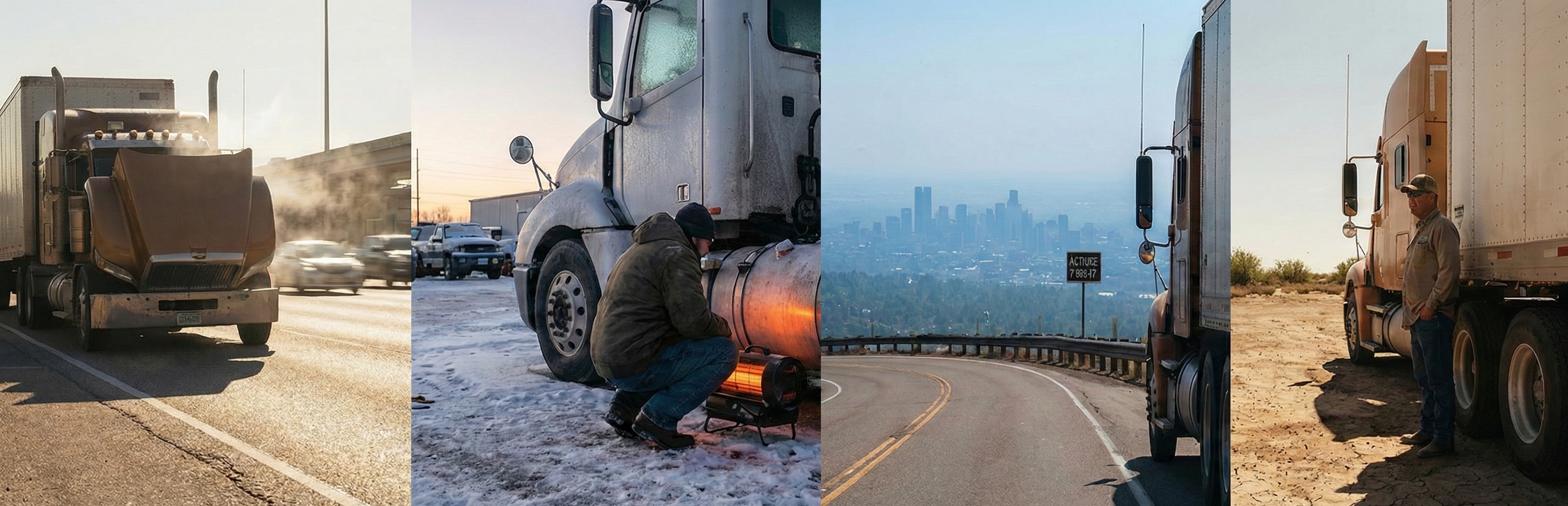
Every City Breaks Trucks Differently: Why Local Trust Matters in Fleet Management
By Caleb Markovich
.png)
Your truck could be broken down at 4 AM in Houston's humid muck or stuck under Kansas City's infamous "Can Opener" bridge.
I can almost guarantee you: the shop you call doesn't even know these places exist.
Take Kansas City, where we’re based.
The Independence Avenue Bridge in Kansas City has only 12 feet, 4 inches of clearance. The average truck is 13 feet, 6 inches tall. Despite warnings plastered everywhere, trucks slam into it constantly. Locals call it the "Bridge Monster" or "The Can Opener."
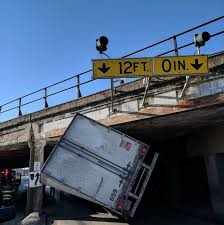
It's destroyed more trucks and ended more careers than any other piece of infrastructure in Missouri. I’ve passed by the accidents and trust me, it's grizzly.
When your driver calls you at 2 AM with their rig wedged under this bridge, you need more than a mechanic. You need someone who already knew this bridge existed.
Someone who's seen it destroy trucks before. Someone who won't waste three hours driving out just to tell you what every Kansas City fleet manager already knows: this isn't a repair job, it's a recovery operation.
That's the difference between calling a repair shop and calling someone you trust.
Geographic knowledge isn't just convenient.
It's the foundation of every reliable fleet relationship.
TL;DR: Your repair partner should know your city's truck killers by name.
Practical Takeaways:
- Local intelligence beats generic service. The right partner knows which bridges eat trucks, when weather turns deadly, and what parts fail in your climate, before you call.
- Use the text message test. If you can't text "SOS" at 2 AM and get help without explaining your location, truck history, or weather conditions, you don't have a partner, you have a vendor.
- Strategic partnerships eliminate the circus. One account manager who knows your routes, locked pricing with no emergency surprises, and preventive maintenance scheduled around your weather patterns—not a generic calendar.
- Every city breaks trucks differently. Houston drowns them in humidity. Kansas City freezes them solid. Generic shops treat all breakdowns the same. That's why your trucks keep breaking.
Houston's Humidity Problem
Managing commercial diesel trucks in Houston can easily turn into a circus act. The city's brutal summer heat and 75-90% humidity create a perfect storm of mechanical failures that generic repair shops never see coming.
Cooling systems fail like clockwork. Salt air from the Port of Houston corrodes everything it touches. Stop-and-go traffic on the 610 Loop pushes engines beyond their limits.
Then there are Houston's breakdown danger zones:
- The Ship Channel Bridge with no shoulder for emergencies
- The I-45/Beltway 8 interchange that floods without warning
- The eternal construction maze around the Galleria
Greg Thierry, who manages a food truck fleet for On the Hook Fish and Chips in Lee Summit, MO, knows these zones cost him $6,000 to $9,000 in daily revenue per truck when breakdowns happen. One bad day can wipe out his monthly profit.
"They promise they'll get it done today,” says Greg. “Then reality hits: 'Well, we gotta wait two more days for parts.'
That breakdown at 4 AM? Too bad your regular go-to shop is booked until Thursday.
Even if you manage to get your driver to a shop, they'll be sitting ducks for 8 hours.
That's $800 minimum, right down the tube.
Kansas City's Weather Whiplash
Managing 20+ trucks through Kansas City's extreme weather swings is a tough ask—even for experienced fleet managers.
In summer, 100°F days cause cooling system failures like clockwork. A typical repair shop sees 55 trucks a day between June and August, all with the same heat-related problems.
Winters aren't much better. Frigid -10°F cold causes fuel gelling and battery death, almost always at the worst possible time.
Factor in the parking crisis, about one parking spot per 15 trucks nationwide, and Kansas City drivers waste 56 minutes daily just searching for safe parking. That's $5,600 in lost wages per driver annually.
The city itself becomes an obstacle course:
- West Bottoms' 18.5% grades and narrow historical streets
- The K-32 railroad crossing that can trap drivers for up to six hours
- DOT inspection failures at Olathe or Harrisonville that ground trucks for days
When Generic Promises Meet Local Reality
There are 20+ commercial truck repair facilities in Houston, and each one claims to be "the best." Every time you pick up the phone, you get a different answer. Different shops, different prices, different quality.
The trust breakdown follows a predictable pattern.
A shop doesn't understand that Kansas City winter destroys brake lines differently than Denver winter; the salt and moisture combination requires specific resistant materials.
They order standard parts. Three days later, when the parts arrive, they don't hold up to local conditions. Your truck breaks down again within weeks.
Here’s another example: The shop that doesn't know about Houston's humidity orders the wrong cooling system components.
Your truck overheats again in three days. You lose another driver who's tired of breakdowns. You miss a critical delivery. One client leaves. Then another.
All it takes is one thing going wrong for it to cascade into bigger problems.
Local Roots, Local Solutions
Dick Feddersen, a long-haul operator in Kansas City, discovered what local trust really means when his dually broke down. Four or five shops refused to work on it because it wasn't an actual semi. TRUCKUP's mechanic couldn't fix it either. Here's where local knowledge became more valuable than mechanical skill.
"He led me to a place that does tires,” says Dick. “They weren't scheduled to be open either, and they were open and took care of me too."
That's not just service. That's someone whose roots are planted firmly in Kansas City. Someone who's been right behind the wheel, dealing with all the problems Kansas City truckers face.
Truckup’s network of mechanics has built over the years knows exactly what parts fail in KC weather. When they arrive at your location, they're pre-stocked with salt-resistant brake lines, heavy-duty cooling systems, and everything else experience has taught them you'll need.
.png)
Your tech should know your climate, not just your fleet.
The Text Message Test
Real trust in fleet management comes down to this: Can you text them at 2 AM?
"I trust his word, like, he never lied to me,” says Greg about Jarel, his Truckup contact. “I can just shoot him a text and be like, 'Hey, bro, I got this going on.'"
.png)
Kea Wanamaker, a Fleet Manager for WillScot Mobile Mini, has the same relationship. At any time, she can text: "SOS David, can you help?"
That's it. No explaining which highway. No describing the weather conditions. No lengthy breakdown of the truck's history.
The geographic context is already there—built into years of local service.
From Circus Act to Strategic Partnership
TRUCKUP's mobile commercial fleet repair program brings order to the chaos. One call, and a commercial truck mechanic will be at your location in an hour, getting your trucks back in service that same day.
But it's what comes after that first call that builds lasting trust:
- Mobile mechanics who come to your yard, zero shop time
- A dedicated fleet account manager who knows your trucks and your routes
- Volume pricing locked in, no emergency rate surprises when Houston floods
- After-hours service with maintenance during driver downtime
- Digital maintenance records all in one place
- Priority response, your trucks jump the queue
- Preventive maintenance scheduled around your routes, your weather patterns, and your danger zones
Every one of these features builds on local knowledge.
The dedicated account manager doesn't just know your trucks. They know your Houston routes hit traffic at 3 PM. The preventive maintenance isn't generic; it's scheduled before Kansas City's first freeze. The mobile mechanics aren't just convenient, they know to bring extra coolant in August and fuel additives in January.
This isn't about managing vendors anymore. It's about partnering with people who understand that every city breaks trucks differently. Success means knowing exactly how yours does it.
Stop managing mechanics. Start managing your business.
Call 1-877-TRUCKUP for custom fleet pricing that understands your geography, your challenges, and your trucks.

.avif)

